In the fast-paced world of electronics assembly and home appliance manufacturing, temporary fixation is never a minor detail. During production, testing, warehousing, and transportation, internal components must remain absolutely stable—without leaving residue, without damaging surfaces, and without failing under extreme temperatures.
This is why rubber based MOPP tape has become the preferred solution for electronics packaging and appliance fixation. At JIN DIAO, we have focused on refining this material system to ensure consistent, long-term reliability under real manufacturing conditions.
For detailed product specifications and available grades, you can refer to our MOPP tape product page:
https://www.cn-aluminumtape.com/MOPP-tape/
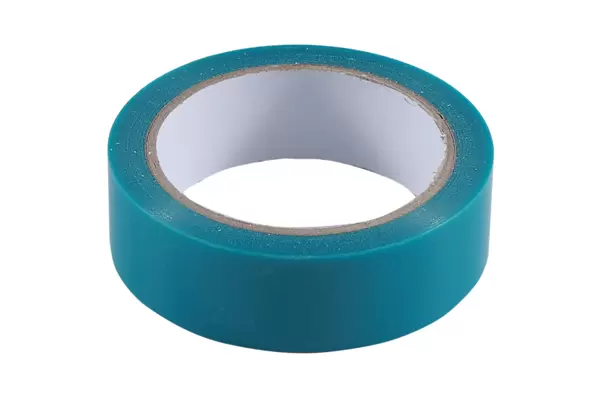
What Is MOPP Tape?
MOPP stands for Monoaxially Oriented Polypropylene Tape. It uses a monoaxially oriented polypropylene film as its backing. One side is coated with a pressure-sensitive adhesive—typically rubber-based or acrylic—while the opposite side is treated with a release coating or corona treatment to optimize bonding performance.
The key difference lies in the monoaxial stretching process. During production, polypropylene resin is stretched in one direction (MD). This aligns molecular chains into a highly ordered crystalline structure, significantly increasing tensile strength in the machine direction while keeping elongation extremely low.
This structural characteristic is the foundation of its superior rigidity and dimensional stability.
Why Refrigerators and Appliances Use MOPP Instead of Other Tapes
In refrigerator manufacturing, internal glass shelves, drawers, and plastic bins must be fixed securely during transport. These parts are heavy, fragile, and often made of PS or ABS plastics.
Many materials—PVC, PE, or even BOPP—may appear suitable at first glance. However, their higher elongation rate becomes a critical weakness.
1. Rigidity That “Locks” Components in Place
MOPP behaves more like a strapping band than a flexible packaging tape. Its extremely high tensile strength and low elongation mean it does not stretch under vibration or impact.
During transportation, refrigerators experience constant shaking, impact, and compression. If a tape stretches even slightly, internal components shift, leading to:
PVC and BOPP tapes elongate too easily. MOPP does not. It holds components firmly in position, resisting deformation even under repeated mechanical stress.
2. No Residue After Removal
One of the most important real-world performance tests occurs when end users forget to remove fixation tape before turning on the refrigerator.
The appliance then runs for weeks or months at low temperature. When the tape is finally removed, poor-quality products may show:
High-quality rubber based MOPP tape avoids these issues.
The reason lies in adhesive design. Rubber-based adhesives used in premium MOPP tape have:
When removed, the adhesive fracture occurs at the interface between glue and substrate—not within the adhesive layer itself. This means no residue remains on plastic surfaces.
Additionally, rubber-based adhesives have low glass transition temperatures (often functional down to -30°C), maintaining flexibility in cold environments. In contrast, many solvent acrylic adhesives become brittle and lose holding strength at low temperatures.
Exceptional Dimensional and Thermal Stability
Under standard test conditions (23±2°C, 50±5% RH), longitudinal thermal shrinkage of high-performance MOPP film is typically less than 1.5%, with premium grades achieving below 1.0%.
This matters in real-world scenarios:
Refrigerators undergo low-temperature performance tests.
During global shipping, containers may reach 50–60°C.
Products may remain stored for extended periods before installation.
Inferior films may shrink, curl, or warp due to internal stress. High-quality MOPP film, with properly released internal stress during heat-setting, remains stable across wide temperature fluctuations.
The monoaxial crystalline structure minimizes response to external thermal changes. The film does not soften excessively in heat, nor does it become brittle in cold when properly formulated.
Electrical Insulation for Electronics Applications
Polypropylene is an excellent insulating material, with volume resistivity reaching 10¹⁶ Ω·cm or higher.
In electronics packaging, this provides:
Electrical isolation during transport
Reduced risk of short circuits
Stable dielectric behavior in varying humidity
For manufacturers assembling control panels, PCBs, or appliance control systems, this insulation property is an added layer of safety.
Weatherability and UV Resistance
Polypropylene is chemically inert. Its dense crystalline structure resists oxygen and moisture penetration, reducing adhesive degradation caused by oxidation or hydrolysis.
When UV stabilizers are incorporated, MOPP film becomes highly resistant to ultraviolet degradation, making it suitable for products exposed to light during warehousing or transport.
MOPP vs BOPP vs PVC: Understanding the Quality Gap
Not all polypropylene tapes are equal.
MOPP vs BOPP
BOPP is biaxially oriented, stretched in both directions.
It offers balanced strength but lower directional tensile performance.
MOPP provides significantly higher strength in the machine direction.
For fixation purposes, directional strength matters more than balanced flexibility.
MOPP vs PVC
PVC has higher elongation.
It lacks the rigidity required for heavy internal components.
PVC may leave residue due to plasticizer migration over time.
Quality Differences Within MOPP
Even among MOPP tapes, significant performance gaps exist due to:
Resin quality
Stretch ratio during orientation
Uniformity of molecular distribution
Heat-setting stress release
Adhesive formulation
Coating weight control
Lower-grade products may show:
Film brittleness after temperature cycling
Excessive shrinkage
Poor corona treatment affecting adhesion
Adhesive aging and residue
At JIN DIAO, we implement strict quality verification:
Tensile testing for strength and elongation
Dyne value testing for corona treatment level
High-temperature oven shrinkage testing
Thickness control with micrometer precision
Haze measurement for crystallinity and transparency
Each jumbo roll is inspected multiple times to ensure production consistency.
Adhesive Engineering: The Core of Long-Term Performance
Rubber-based adhesive selection is not accidental.
Most refrigerator internal parts are PS or ABS plastics, which are relatively low-polarity surfaces. Rubber adhesives, also low in polarity, wet these surfaces more effectively and build high bond strength quickly.
In high-speed production lines, immediate holding power improves efficiency. Compared to solvent acrylic adhesives, rubber-based systems provide stronger sustained holding without requiring long curing times.
Proper coating weight control is equally critical. Too little adhesive reduces holding power. Too much increases removal force and may cause residue. Stable coating processes and temperature-controlled drying ovens are essential to maintaining molecular integrity and long-term performance.
Proven in Long-Term Appliance Applications
High-quality rubber based MOPP tape has been used for more than two decades in global appliance supply chains. Its reliability has been validated under:
Cold storage
Long-distance sea freight
High-temperature container transport
Extended warehouse storage
Even in cases where consumers forgot to remove fixation tape before operating refrigerators, premium-grade MOPP maintained stable adhesion without curing, embrittlement, or residue formation.
This real-world durability is why MOPP remains the dominant fixation material in appliance manufacturing.
Conclusion
Rubber based MOPP tape is not just another packaging tape. Its monoaxial molecular structure delivers unmatched rigidity and dimensional stability. When combined with a properly engineered rubber adhesive system, it provides secure fixation, clean removability, and long-term temperature resistance.
For electronics packaging and appliance internal component fixation, the difference between average and high-performance MOPP is not theoretical—it directly affects product safety, brand reputation, and customer satisfaction.
At JIN DIAO, we focus on material science, process control, and adhesive engineering to ensure every roll performs reliably in demanding industrial environments.


 WhatsApp