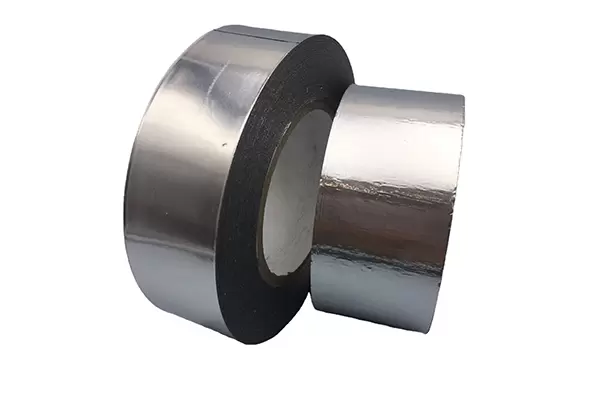
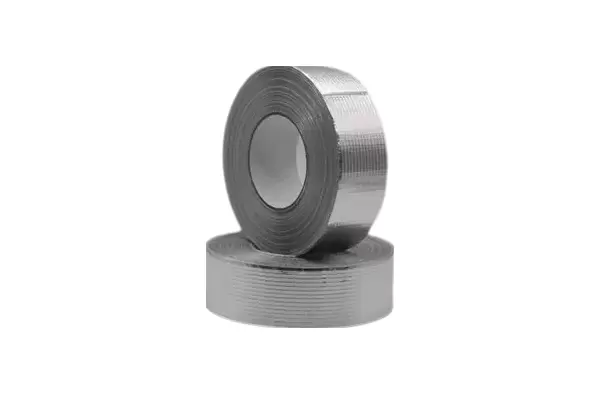
When internal components need both mechanical fixation and reliable protection, ordinary adhesive tape may not provide enough long-term performance. In applications exposed to heat, moisture, oils, temperature fluctuations, or chemical environments, the tape needs to become part of the assembly rather than simply remain attached to its surface. This is where VC Heat-sealable Aluminum Foil Tape with Release Paper Liner can provide a practical solution for thermal sealing and component fixation.
Designed with aluminum foil as the primary substrate, this tape combines the barrier properties of aluminum with a heat-sealable VC backing layer and a pressure-sensitive adhesive system. The combination makes it suitable for internal heating wires, battery cell connections, battery module sealing, and other applications where reliable bonding and environmental protection are required.
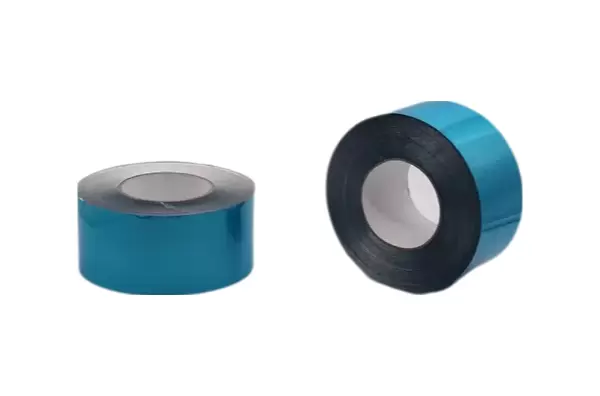
How Does VC Coated Aluminum Foil Tape Work?
The structure of the tape is designed around two different bonding functions. The backside of the aluminum foil is coated with VC, or Vinyl Composite, material. Under suitable heat and pressure, this layer thermally bonds to the target substrate and creates a tight, permanent composite structure.
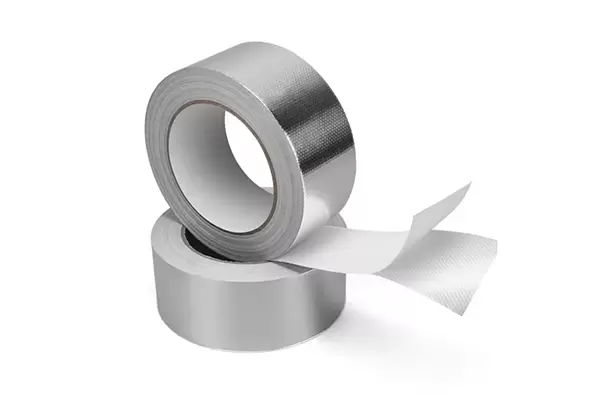
On the front side, the aluminum foil is coated with a pressure-sensitive adhesive and laminated with a release-treated backing material. This construction allows the tape to be handled, positioned, and applied during assembly before the final thermal bonding process takes place.
The aluminum foil provides the physical barrier, while the VC coating contributes to heat sealing and permanent bonding. Instead of relying entirely on a conventional adhesive layer to maintain the connection throughout the service life, the heat-sealed VC layer can form a more integrated bond with compatible substrates.
This is particularly useful for internal components where movement, vibration, heat, or environmental exposure could gradually weaken conventional bonding methods.
Why Aluminum Foil Matters in Internal Component Protection
Aluminum foil is widely used in technical tapes because it offers a combination of barrier performance and dimensional stability. In internal assemblies, the foil layer can help block moisture, air, oils, and UV radiation from reaching protected areas.
For battery packs and household appliances, this protection can be important because internal components may operate under changing temperatures and come into contact with moisture or other environmental contaminants.
The aluminum substrate also works well as part of a compact assembly. It can provide coverage without requiring a thick protective structure, making aluminum foil tape suitable where available installation space is limited.
With the VC coating added to the reverse side, the product is not simply functioning as a barrier tape. It becomes a sealing and fixation material designed for applications where thermal bonding is required.
Reliable Thermal Bonding for Heating Resistor Wires
Household appliances often contain heating resistor wires that operate at elevated temperatures. These wires need to remain correctly positioned while being protected from surrounding environmental influences.
In such applications, VC heat-sealable aluminum foil tape can be used for thermal sealing and fixation of internal heating resistor wires. The heat-sealing layer can bond with the substrate when heat and pressure are applied under appropriate processing conditions.
This creates a more stable connection between the tape and the component. At the same time, the aluminum foil helps provide a barrier against moisture, air, and oils.
The tape therefore performs several functions within one material: fixation, sealing, environmental protection, and thermal bonding. This can simplify component assembly and reduce the need to combine several separate materials for different purposes.
Application in New Energy Battery Packs
Battery assembly is another important application for VC coated aluminum foil tape. In battery packs, series and parallel connections between cells need to be properly insulated and fixed to maintain a stable internal structure.
The tape can be used for insulation and fixation around battery cell connections. It can also support sealing between battery module covers and casings, where protection from external environmental factors is important.
The heat-sealable VC backing is particularly relevant to these applications because the final bond can be produced through controlled heat and pressure. When the correct processing parameters are used, the resulting composite structure can provide stable fixation over extended service periods.
For battery manufacturers and component suppliers, selecting a tape with appropriate thickness, adhesive type, peel strength, tensile strength, and holding power is essential. The right specification depends on the construction of the battery pack, bonding surface, assembly process, and expected operating environment.
Technical Specifications for Different Assembly Requirements
This VC heat-sealable aluminum foil tape is available in multiple constructions to accommodate different production requirements.
One 150 μm specification uses a VC coating, solvent-based adhesive, and PET liner. It is available in a 440 × 200 mm × m size format and provides a 180° peel strength of at least 7.5 N/cm, initial tack of at least 15#, holding power of at least 24 hours, and tensile strength of at least 30 N/cm.
A thinner 185 μm specification also uses a VC coating, solvent-based adhesive, and PET liner. Its standard size is 70 × 50 mm × m, with a minimum 180° peel strength of 7.5 N/cm, initial tack of 15#, holding power of 24 hours, and tensile strength of at least 20 N/cm.
For applications requiring a different adhesive construction, the 160 μm version uses a VC coating, rubber adhesive, and glassine paper liner. Its standard size is 34 × 600 mm × m, with a minimum 180° peel strength of 7.5 N/cm, initial tack of 15#, holding power of 24 hours, and tensile strength of at least 20 N/cm.
These different constructions allow users to select a suitable combination based on the substrate, assembly method, required handling characteristics, and final application.
Durability Under Challenging Conditions
Thermal bonding is only useful if the bonded structure can withstand the conditions encountered during actual operation. For this reason, durability is another important consideration when selecting an aluminum foil tape.
The VC heat-sealable construction offers resistance to high and low temperatures, chemical corrosion, and aging. Combined with the aluminum foil barrier, the tape is designed to maintain its protective and bonding functions in demanding internal environments.
However, the actual performance of any heat-sealed assembly depends on factors such as substrate compatibility, surface condition, temperature, pressure, bonding time, and production equipment. Manufacturers should therefore validate the tape under actual assembly conditions before large-scale production.
Tolerance and Storage Requirements
Consistent dimensions are important when aluminum foil tape is integrated into automated or semi-automated assembly processes. The specified tolerance for aluminum foil thickness is ±0.005 mm, while total thickness tolerance is ±0.01 mm. Width tolerance is ±0.5 mm, and length tolerance is ±0.2 m.
For storage, the tape should be kept in a cool and dry environment at room temperature. Recommended conditions are -5°C to 40°C with relative humidity below 80%. Direct sunlight and exposure to heat sources should be avoided.
Proper storage helps maintain the adhesive and liner condition before the tape enters the production process.
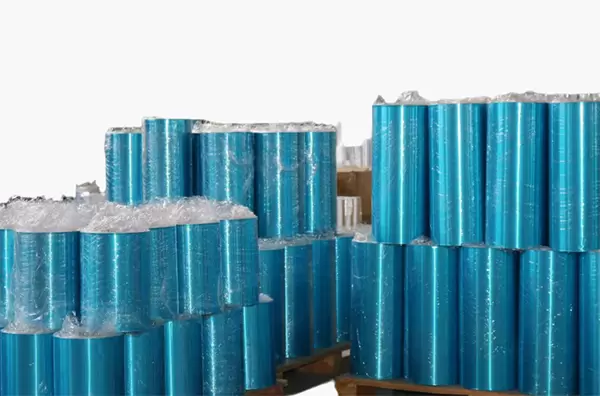
Working With an Experienced Aluminum Foil Tape Manufacturer
Selecting the right tape is not always simply a matter of choosing the highest-strength product. The bonding substrate, application temperature, environmental conditions, assembly process, and required service life all influence the final result.
An experienced Aluminum Foil Tape Solutions Manufacturer can help customers evaluate these factors before selecting a specification. With a manufacturing history dating back to 1980, the manufacturer behind this product has 45 years of specialized experience in tape production and more than 25 years of international trade experience.
The company operates on a 15,000 m² production base and has an annual production capacity of approximately 20 million m² of various aluminum foil tapes. Its export business represents more than one-third of total sales, with customers across Europe, Southeast Asia, Central Asia, and North America.
More importantly, technical communication is built around the customer's actual application. The manufacturer can analyze the application environment and recommend adjustments to substrate or adhesive formulations when necessary. Customized raw material sourcing and product development are also available for specialized requirements.
This approach can be particularly valuable for battery manufacturers, appliance manufacturers, and industrial component suppliers that require a tape specification adapted to a specific production process rather than a standard product selected only from a catalog.
Choosing the Right VC Heat-Sealable Aluminum Foil Tape
For internal component bonding, a reliable tape needs to do more than stick to a surface. It should provide the appropriate balance of heat-sealing performance, adhesive strength, barrier protection, durability, and dimensional consistency.
The VC Heat-sealable Aluminum Foil Tape with Release Paper Liner combines an aluminum foil substrate, VC heat-sealable coating, pressure-sensitive adhesive, and release liner to address these requirements in a single tape construction.
For household heating components, battery cell connections, battery module covers, and similar assemblies, the product offers a practical approach to thermal sealing, insulation, fixation, and environmental protection. By matching the tape specification with the actual substrate and assembly process, manufacturers can build more stable internal structures and improve long-term component reliability.

 WhatsApp