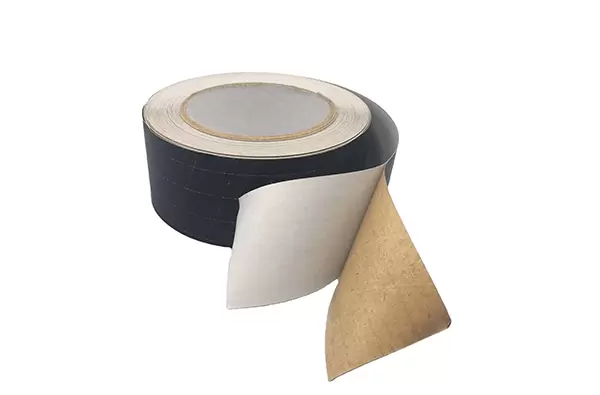
In the manufacturing and logistics transportation of refrigerators and other household appliances, MOPP tape has become the absolute mainstream solution for securing internal components. This is because it achieves a perfect balance between high tensile strength, low elongation, residue-free removal, and cost efficiency.
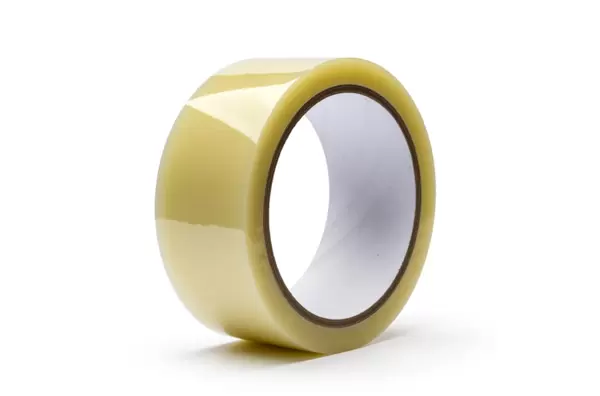
1️⃣ MOPP Backing Material Analysis – The Core of Rigid Fixation
MOPP (Monoaxially Oriented Polypropylene) film is produced by stretching polypropylene (PP) resin particles in a single direction. During this process, PP molecular chains are highly aligned longitudinally, resulting in strong intermolecular forces and high crystallinity.
This structure gives MOPP film:
By comparison, BOPP film is biaxially stretched, forming a more balanced mesh-like structure. While balanced, its absolute strength in a single direction is significantly lower than that of MOPP.
During transportation, refrigerators are subjected to vibration, impact, and jolting. If tapes with high elongation (such as PVC, PE, or BOPP) are used, drawers and glass shelves may shift, leading to collisions and breakage.
MOPP’s rigidity functions similarly to strapping tape, locking components firmly in place. Even under continuous impact, its high tensile strength prevents deformation, ensuring maximum protection.
Additional advantages include:
Excellent stiffness with no curling caused by internal stress
No lifting even after significant stretching during application
Smooth, one-piece removal without tearing or delamination
Superior high- and low-temperature stability
Refrigerators may experience temperature fluctuations from low-temperature performance testing to storage in containers reaching 50–60°C. MOPP film maintains dimensional stability without becoming brittle, soft, or prone to lifting.
For more details about high-performance MOPP tape products, please visit:
https://www.cn-aluminumtape.com/MOPP-tape/
2️⃣ Rubber-Based Adhesive Analysis – Strong Hold Without Residue
MOPP tape typically uses a rubber-based adhesive, and this choice is critical.
Refrigerator internal components are commonly made of PS or ABS plastics, which have relatively low surface polarity. Rubber-based adhesives also exhibit low polarity, allowing better wetting of plastic surfaces and generating strong adhesion quickly.
Advantages over solvent-based acrylic adhesives:
Faster bonding on production lines
Higher holding power without long curing time
Superior resistance to premature failure before shipment
While solvent acrylic adhesives may offer good initial tack, their holding power often requires maturation time under standard pressure conditions. Without this, tapes may fail before products leave the factory.
Rubber-based adhesives also provide:
Elastic energy absorption under impact (spring-like cushioning effect)
Strong internal cohesion (key to residue-free removal)
Clean peel performance (adhesive breaks at the interface, not within the glue layer)
No adhesive transfer onto plastic components
Reduced risk of “ghosting” (yellowing, fogging, discoloration on PS/ABS surfaces)
Excellent low-temperature performance (effective even at -30°C)
In contrast, ordinary solvent adhesives may harden and lose adhesion at low temperatures.
3️⃣ Key Advantages of Rubber-Based MOPP Tape for Refrigerators
Perfect Rigid Fixation
Heavy and fragile components such as glass shelves and vegetable drawers require firm locking. PVC or BOPP tapes stretch easily and cannot completely secure these parts during transportation, increasing the risk of damage and liner scratches.
Residue-Free Removal
The combination of MOPP film and rubber adhesive ensures adhesive cohesion is greater than interfacial adhesion. As a result, the adhesive remains bonded to the MOPP backing instead of transferring to plastic parts.
Additionally, it offers:
Excellent anti-aging performance
Strong long-term holding power
Stable performance in both high and low temperatures
4️⃣ Our Production Standards for MOPP Tape Manufacturing
Raw Material Quality Control
The long-term stability of MOPP tape depends heavily on film and adhesive quality. Variations in resin quality, insufficient stretching ratio, uneven particle distribution, or inadequate stress release during heat setting may degrade film performance.
Our quality inspections include:
Tensile testing for strength and elongation
Dyne level testing for corona treatment adequacy
Hot air oven testing for thermal shrinkage stability
Thickness measurement within tolerance range
Haze meter testing for transparency and crystallinity
Our self-developed rubber-based adhesive has been used in refrigerator internal tapes for over 20 years. We are long-term suppliers to international brands such as Midea, Siemens, Toshiba, and Panasonic.
We adjust resin or tackifier formulations according to regional climate conditions worldwide to ensure stable cohesion and temperature resistance.
Production Process Control
With high-quality raw materials ensured, we strictly control:
Proper coating weight guarantees strong fixation without excessive adhesion that may cause residue.
Excessive coating may increase peel force and risk adhesive transfer. Overheating during coating can damage molecular chains, accelerating aging and reducing holding power.
Each jumbo roll undergoes 2–3 random inspections to ensure consistent batch stability.
Finished Product Inspection
Before shipment, all finished rolls undergo secondary inspection to:
 WhatsApp