When selecting reinforced aluminum foil tape for insulation, HVAC, appliance, or fire-protection applications, the adhesive system can be just as important as the foil and reinforcement layers. A tape may have the right thickness and tensile strength, but if the adhesive does not match the application environment, installation conditions, or required service life, overall performance can be compromised.
For this reason, water-based and solvent-based pressure-sensitive adhesives should not simply be treated as interchangeable options. They provide different combinations of adhesion, processing characteristics, storage life, and application suitability.
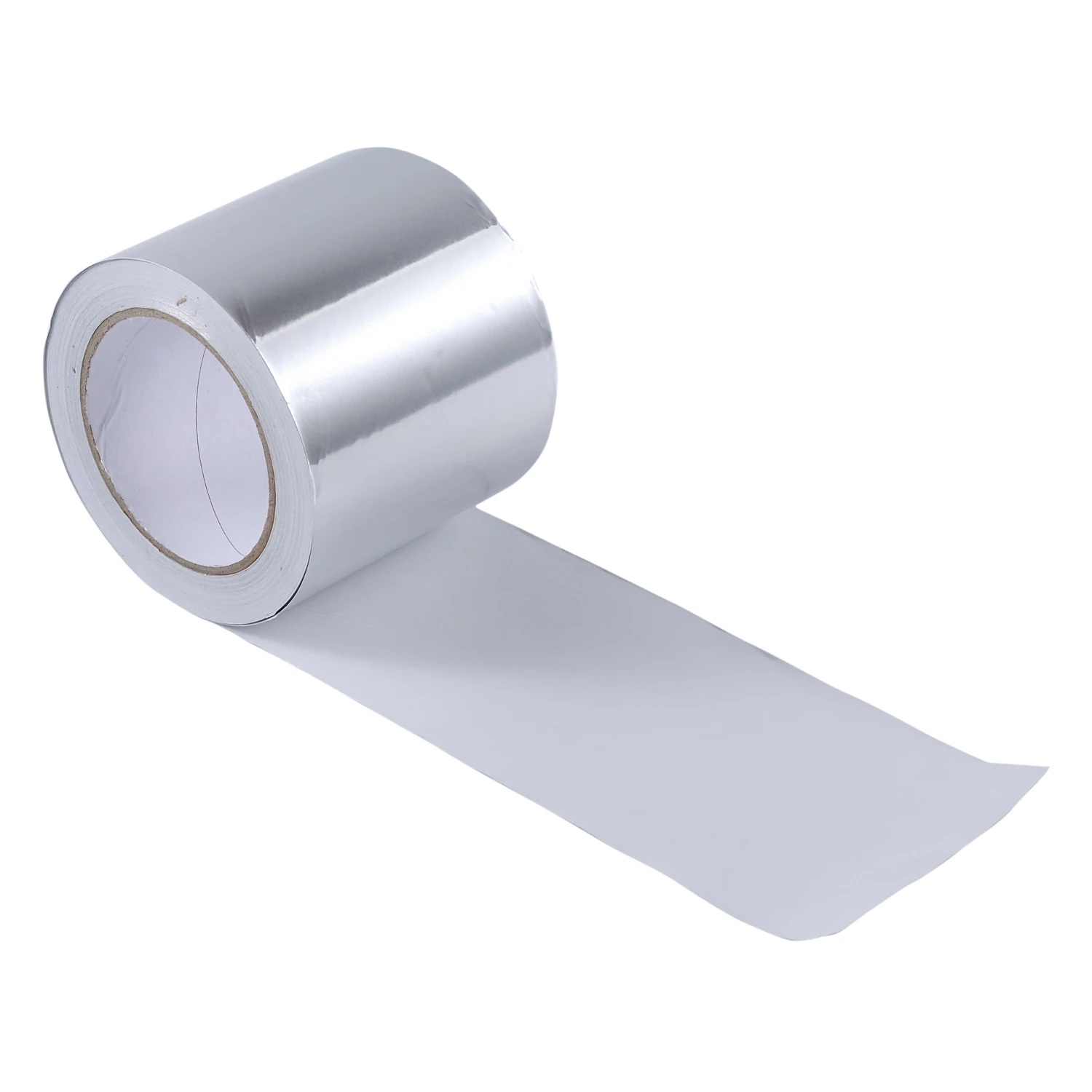
The Reinforced Aluminum Foil Tape produced with a composite substrate and pressure-sensitive adhesive provides two adhesive configurations: a water-based option and a solvent-based option. Understanding the differences between them helps buyers select the appropriate tape for a specific application rather than choosing solely according to the tape's appearance or basic specifications.
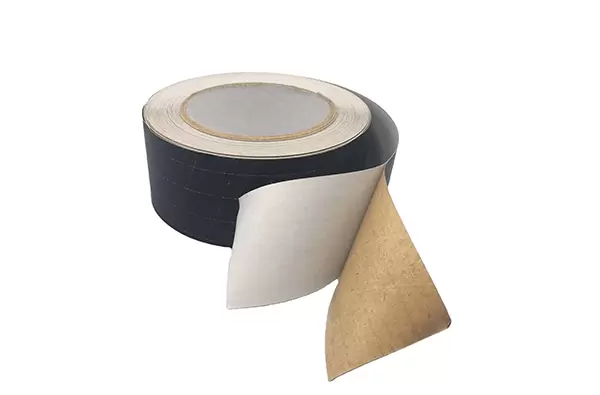
How Reinforced Aluminum Foil Tape Is Constructed
Before comparing adhesives, it is useful to understand the structure of the tape itself.
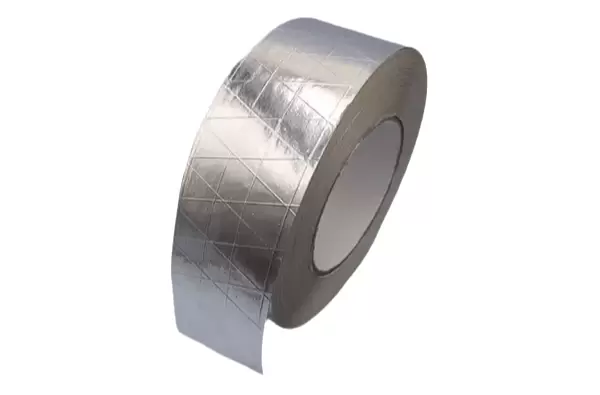
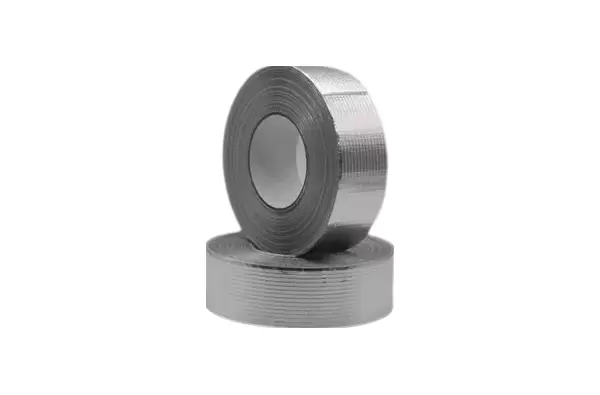
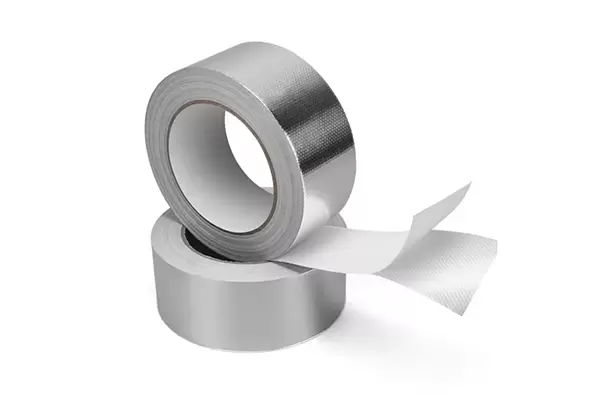
The Reinforced Aluminum Foil Tape is a multilayer composite rather than a simple aluminum foil tape. Its structure combines an aluminum foil layer, a reinforcement scrim, and a paper-based substrate. Depending on the specification, the reinforcement can use polyester or fiberglass-related scrim structures, while the substrate can incorporate kraft paper or other reinforced paper constructions.
A pressure-sensitive adhesive is applied to the composite structure, followed by a release paper or film. This construction gives the tape a combination of properties that are difficult to achieve with plain aluminum foil alone.
The reinforcement improves tensile strength while allowing the tape to retain useful flexibility. At the same time, the aluminum layer contributes barrier protection against moisture and dust, while the multilayer structure improves durability during handling and installation.
For insulation wrapping and other applications where the tape may need to follow irregular surfaces, this balance between strength and flexibility is particularly useful.
Water-Based Adhesive: When Is It a Practical Choice?
Water-based PSA is commonly considered when manufacturers or end users need a balanced adhesive solution for general-purpose industrial applications.
In the reinforced foil tape specifications, the water-based adhesive version uses a scrim-reinforced kraft paper composite substrate. The standard specification has a total thickness of 130 μm, with a 180° peel strength of at least 4 N/cm, initial tack of at least 10#, and holding power of at least 24 hours. Its tensile strength is specified at a minimum of 40 N/cm.
These properties make the water-based version suitable for applications where reliable adhesion and mechanical reinforcement are required without moving toward a more specialized adhesive formulation.
For example, when the tape is being used to secure or protect insulation around HVAC ducts, industrial plumbing, or refrigeration pipelines, the installer may need a tape that can conform to the insulation surface while maintaining sufficient tensile strength during application.
The water-based option can therefore be considered when the application conditions are relatively controlled and the required service performance can be achieved with this adhesive system.
Solvent-Based Adhesive: Where Does It Differ?
Solvent-based PSA provides another performance route for reinforced foil tape applications. In the specified product configuration, the solvent-based version uses a BOPP laminate with fiber-reinforced kraft paper and a white paper liner.
This specification has a total thickness of 150 μm, with a 180° peel strength of at least 6 N/cm. Initial tack is at least 10#, holding power is at least 24 hours, and tensile strength is at least 40 N/cm.
The higher specified peel strength is one of the key differences between the two configurations. For applications where stronger adhesion to the target surface is important, this can be an important consideration during product selection.
The solvent-based adhesive version also has a stated shelf life of 12 months, compared with 6 months for the water-based and flame-retardant adhesive options, assuming the recommended storage conditions are maintained.
This does not mean that solvent-based adhesive is automatically better for every application. The correct choice depends on the surface, installation environment, required adhesion, storage requirements, and other technical factors.
Water-Based vs. Solvent-Based: Key Differences
The most useful way to compare the two adhesive systems is to look at their actual specifications and intended use rather than assuming that one technology is universally superior.
Parameter | Water-Based | Solvent-Based |
Composite substrate | Scrim-Reinforced Kraft Paper | BOPP Laminate with Fiber-Reinforced Kraft Paper |
Total thickness | 130 μm | 150 μm |
180° Peel Strength | ≥4 N/cm | ≥6 N/cm |
Initial Tack | ≥10# | ≥10# |
Holding Power | ≥24 h | ≥24 h |
Tensile Strength | ≥40 N/cm | ≥40 N/cm |
Liner | Kraft paper | White paper |
Shelf Life | 6 months | 12 months |
The table shows an important point: the differences are not limited to adhesive chemistry. The two versions also use different composite substrate and liner configurations.
Therefore, buyers should evaluate the complete tape construction instead of asking only whether a water-based or solvent-based adhesive is stronger.
Which Adhesive Is Better for Thermal Insulation Wrapping?
Thermal insulation wrapping is one of the primary applications for reinforced aluminum foil tape. The tape can be used around insulation systems in HVAC, industrial plumbing, refrigeration, and related installations.
During installation, the tape may be pulled, cut, overlapped, and pressed against insulation or other surfaces. Tensile strength helps the tape resist tearing during handling, while adhesive performance determines whether the tape remains properly attached after installation.
The reinforced construction of the Reinforced Aluminum Foil Tape addresses the mechanical side of this requirement. With a minimum specified tensile strength of 40 N/cm for both listed configurations, the tape provides substantially reinforced handling characteristics compared with plain foil structures.
For general insulation applications where the specified adhesion is sufficient, the water-based configuration can be evaluated as a practical choice. Where higher peel strength or longer stated shelf life is required, the solvent-based version may be more appropriate.
The final decision should still be based on actual insulation material, surface condition, installation temperature, exposure conditions, and project requirements.
Why Reinforcement Matters Alongside Adhesive Selection
It is easy to focus on adhesive performance when comparing tapes, but the reinforcement layer also has a direct influence on installation reliability.
Pure aluminum foil is relatively easy to tear when subjected to concentrated mechanical force. Adding fiberglass or polyester scrim creates a stronger composite structure that can better withstand pulling and handling during installation.
The reinforcement also allows the tape to retain a useful degree of flexibility. This is important when wrapping cylindrical pipes, corners, joints, ducts, or other surfaces that are not perfectly flat.
The multilayer construction additionally provides protection against moisture, dust, and aging. In insulation systems, maintaining the integrity of the outer tape layer can help protect the underlying insulation from environmental exposure.
This is why Reinforced Aluminum Foil Tape should be evaluated as a complete composite system, with foil, reinforcement, substrate, adhesive, and liner working together.
Choosing Between the Two Adhesive Systems
For buyers sourcing reinforced foil tape for industrial applications, several practical questions should be answered before selecting the adhesive type.
First, identify the surface to which the tape will be applied. Aluminum foil, insulation materials, coated surfaces, paper-based materials, and other substrates can have different adhesion requirements.
Second, consider the installation environment. Temperature, humidity, exposure to moisture, and the condition of the surface can all influence adhesive performance.
Third, determine the required peel strength. The specified water-based version provides a minimum 180° peel strength of 4 N/cm, while the solvent-based version provides a minimum of 6 N/cm.
Fourth, consider procurement and storage cycles. The stated shelf life is 6 months for water-based and flame-retardant adhesive versions and 12 months for the solvent-based version when stored under recommended conditions.
The manufacturer recommends storage in a cool, dry environment at room temperature, between -5°C and 40°C, with relative humidity below 80% RH. Direct sunlight and heat sources should be avoided.
Manufacturing Experience Behind the Tape
Adhesive selection is only one part of producing a consistent industrial tape. Substrate quality, coating control, slitting accuracy, raw material selection, and production management all affect the final product.
Jiangyin Biaotie Material Factory Co., Ltd. has specialized in tape manufacturing since 1980 and has accumulated more than four decades of production experience. The company operates a manufacturing site covering approximately 15,000 m² and produces around 20 million m² of various aluminum foil tapes annually.
Its experience in international trade also gives the company a practical understanding of different application environments and customer requirements. The company has worked with customers across Europe, Southeast Asia, Central Asia, and North America, with some customer relationships lasting more than 20 years.
Rather than applying the same specification to every market, the company emphasizes communication about the actual application region and operating conditions. This can include evaluating substrate structures, adhesive formulations, and raw materials according to the intended use.
Customization for Different Applications
Standard specifications are suitable for many projects, but industrial customers may have requirements that fall outside a standard product configuration.
For specialized applications, Jiangyin Biaotie Material Factory Co., Ltd. can evaluate customized raw materials, adhesive formulations, substrates, and other product parameters according to customer requirements.
The company also continuously upgrades raw materials and develops higher-performance adhesive systems. Production equipment is being improved with greater automation and program control to help manage coating and slitting tolerances more precisely.
For buyers working on large insulation, infrastructure, appliance, or industrial projects, discussing the actual application before production can help determine whether a standard water-based or solvent-based version is appropriate, or whether a customized construction would provide a better fit.
Making the Right Adhesive Decision
There is no universal answer to whether water-based or solvent-based adhesive is the better choice for reinforced foil tape. The correct selection depends on the complete application.
Water-based adhesive can be considered when a balanced specification is sufficient for the intended installation. Solvent-based adhesive may be preferred where higher specified peel strength and longer stated shelf life are important considerations.
Other factors, including the reinforcement structure, aluminum foil thickness, substrate, liner, storage conditions, and application environment, should also be evaluated together.
For industrial buyers, the most reliable approach is to provide the manufacturer with details about the application, target surface, operating environment, required tape dimensions, and expected service conditions. This allows the tape structure and adhesive system to be matched to the actual requirements.
With its reinforced composite construction and available water-based and solvent-based adhesive configurations, the Reinforced Aluminum Foil Tape offers a flexible option for insulation wrapping, appliance-related applications, infrastructure fire protection, and other industrial uses where strength, adhesion, and barrier protection need to work together.
 WhatsApp