Small-diameter copper tubes are widely used in refrigeration equipment, including condenser and evaporator assemblies. Their compact dimensions allow manufacturers to arrange heat-exchange components efficiently, but they also create practical challenges during insulation and protective wrapping. When tape is applied around a narrow tube, it must follow the curved surface closely, maintain adhesion, and withstand the tension generated during manual or machine application. A material that tears easily or becomes difficult to handle can slow down production and lead to inconsistent coverage.
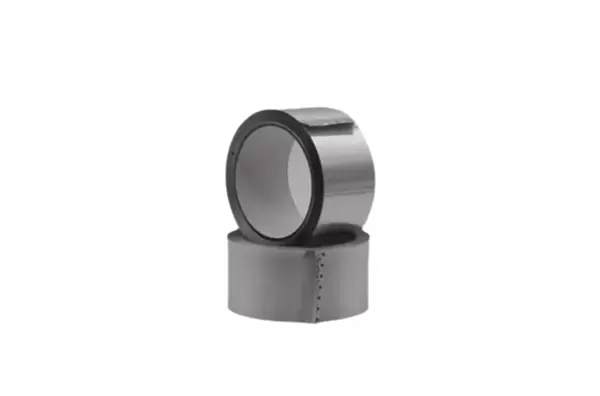
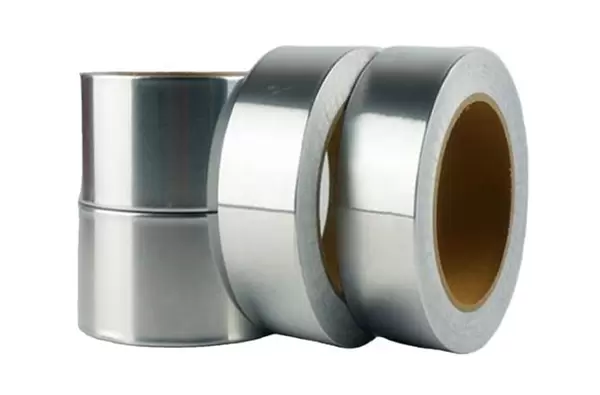
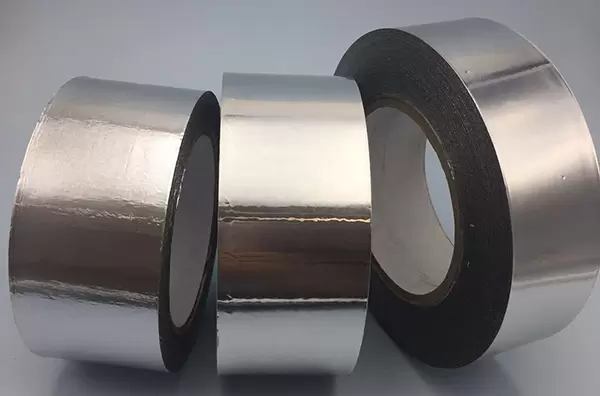
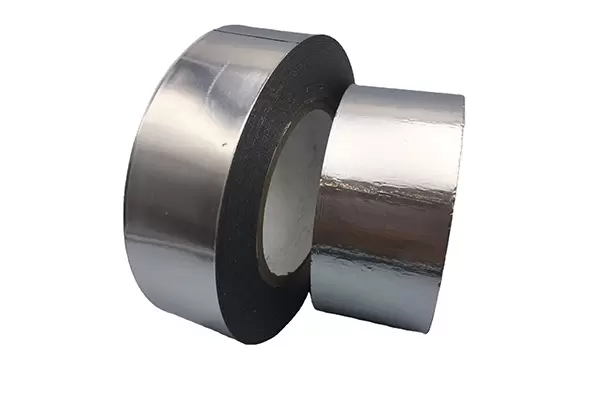
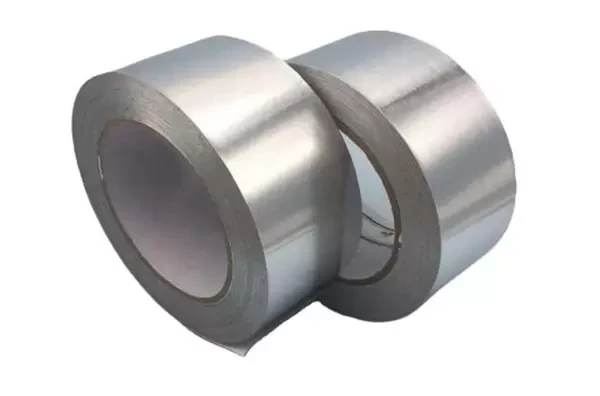
Aluminum foil adhesive tape offers a practical solution for wrapping and protecting condenser tubing. However, conventional aluminum foil tape with release paper can create additional handling steps and waste during high-volume production. A liner-free construction addresses this issue while combining aluminum foil with a polymer film to improve the tape's mechanical properties. Aluminum Foil Liner-Free Adhesive Tape is designed for applications that require convenient winding, reliable bonding, and protection of metal surfaces, including the full wrapping of thin copper condenser tubes.
Why Small-Diameter Copper Tubes Need Suitable Wrapping Materials
Wrapping a small-diameter condenser tube is different from covering a large, flat surface. The tape must bend around a narrow circumference while maintaining contact with the tube. If the backing material has insufficient flexibility or tensile strength, it may break when tension increases during winding. A break interrupts the wrapping process and can leave sections of the copper surface exposed.
The wrapping material also needs to remain stable during handling and subsequent equipment operation. Uneven application, lifted edges, or gaps between overlapping sections may reduce the effectiveness of the protective layer. For refrigeration systems, where condenser and evaporator pipelines operate as part of a thermal management assembly, consistent coverage is an important consideration.
Aluminum foil is useful in these applications because it provides a metal-based barrier layer and can be combined with adhesive coatings for surface attachment. However, pure aluminum foil can be vulnerable to tearing under excessive tension, particularly when narrow tubes are wrapped using automated equipment. A reinforced construction can help address this limitation without abandoning the functional characteristics of aluminum foil tape.
Polymer Film Lamination Improves Flexibility and Tensile Strength
The backing structure is one of the main factors that determines how a tape performs during winding. In this product, polymer film and aluminum foil are used as the primary base materials. The film is first laminated with the aluminum foil, creating a composite structure that combines the properties of both materials.
The polymer film significantly improves the tape's extensibility and tensile strength compared with pure aluminum foil tape. During wrapping, the tape needs to follow the tube's curved surface while tolerating the pulling force generated by the winding process. Improved mechanical strength helps reduce the risk of breakage, making the material more suitable for continuous application.
This feature is particularly relevant to small-diameter copper condenser tubes. A narrow tube requires the tape to bend around a relatively tight radius. If the backing cannot accommodate the winding tension and surface curvature, operators may need to stop frequently to replace broken tape or correct incomplete wrapping. A film-reinforced aluminum foil structure helps reduce these interruptions and supports more consistent application.
For manufacturers using automated wrapping equipment, tensile strength is especially important. Machine application involves controlled feeding and tension, and the tape must remain intact as it passes through the equipment. The reinforced structure helps reduce damage during this process and can support more stable production operations.
How the Liner-Free Structure Simplifies Tape Application
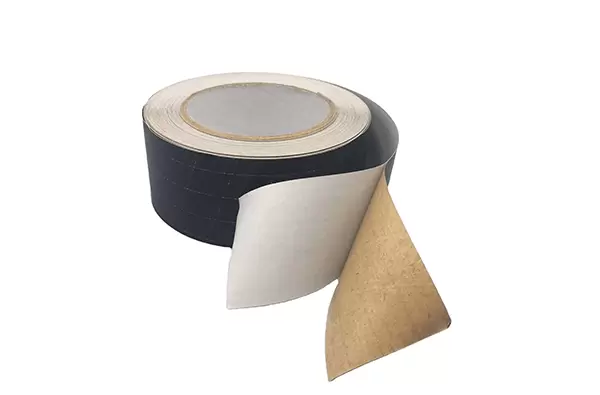
Traditional aluminum foil adhesive tape commonly uses release paper to protect the adhesive layer before application. Although this construction is familiar, the release liner must be removed during use and then collected or discarded. In high-volume manufacturing, these additional steps can affect handling efficiency and generate unnecessary waste.
The liner-free design eliminates the release paper. Instead, a release agent is applied to the back of the film or the back of the laminated material, allowing the tape to be wound into a roll while protecting the adhesive surface. When the tape is unwound, the adhesive side is ready for application without a separate liner-removal step.
The production structure involves several coating and lamination stages. First, the polymer film is laminated with aluminum foil. A release agent is then applied to the back of the film, while adhesive is coated on the aluminum foil side. The finished material is subsequently rolled into the required product format.
For copper tube wrapping, this construction can make continuous feeding more convenient. Operators do not need to remove release paper while winding the tape around each tube, and automated equipment can handle the roll without managing a separate liner. The reduction in liner waste is also useful for production lines where large quantities of tape are consumed.
Aluminum Foil Liner-Free Adhesive Tape therefore offers more than a change in packaging or handling format. Its liner-free construction works together with the polymer film backing to address two practical requirements: convenient unwinding and improved resistance to breakage during application.
Adhesion and Corrosion Resistance in Refrigeration Systems
A wrapping tape used on condenser and evaporator pipelines must provide suitable adhesion while protecting the underlying surface. In refrigeration equipment, components may operate under changing temperatures and environmental conditions. The tape's adhesive formulation and backing structure should therefore be selected according to the actual application requirements.
The aluminum foil layer provides the metal-based surface, while the polymer film lamination enhances resistance to corrosion and helps protect the aluminum from chemical exposure. This is an important advantage when the tape is used in environments where the wrapped material may encounter moisture or other external influences.
Adhesion performance also varies according to the adhesive type. The available product specifications include water-based, solvent-based, flame-retardant, two-component, and rubber adhesive options. These formulations are offered with different film structures and thicknesses, so buyers should select a specification based on the required bonding conditions and production process rather than assuming that all versions have identical performance.
For example, the listed configurations include 70 μm products with BOPP film and different adhesive systems, an 80 μm flame-retardant option, a 90 μm two-component adhesive version using PET film, and 120 μm options with PE film or other backing configurations. The available widths and roll lengths also vary by specification.
When selecting tape for copper condenser tubes, manufacturers should consider tube diameter, wrapping tension, surface condition, required overlap, operating environment, and the compatibility of the adhesive with the application. Testing the selected specification on actual production samples is a practical way to verify unwinding behavior, adhesion, and wrapping consistency.
Technical Parameters and Quality Control for Bulk Procurement
Technical data provides a basis for comparing different tape configurations and checking whether a product matches the requirements of a production line. The listed specifications cover total thickness, adhesive type, film type, release agent, roll size, peel strength, initial tack, holding power, and tensile strength.
The available data includes 180-degree peel strength values ranging from at least 4 N/cm to 8.5 N/cm, depending on the adhesive and product construction. Initial tack is listed at 15# or above, while holding power is specified at 24 hours or more. Tensile strength varies by configuration, with listed minimum values from 20 N/cm to 40 N/cm.
These figures should be read alongside the specific product construction. A higher tensile strength value may be useful for applications involving greater winding tension, while adhesive selection should reflect the surface and operating conditions. Buyers should avoid comparing individual figures without checking whether the products use the same backing, thickness, and adhesive system.
Dimensional tolerances are another consideration for production planning. The stated tolerance for aluminum foil thickness is ±0.005 mm, total thickness is ±0.01 mm, width is ±0.5 mm, and length is ±0.2 m. These specifications help buyers assess material consistency when ordering tape for repeated manufacturing operations.
Storage conditions also affect product usability. The tape should be kept in a cool, dry environment at room temperature, within a temperature range of -5°C to 40°C and relative humidity below 80% RH. Direct sunlight and exposure to heat sources should be avoided. The stated shelf life is six months for water-based and flame-retardant adhesives, and twelve months for solvent-based and rubber adhesives. Buyers should confirm the applicable shelf life for the exact adhesive version ordered.
Manufacturing Support from Jiangyin Biaotie Material Factory
Choosing a suitable tape specification is only part of the sourcing process. For manufacturers purchasing materials in bulk, the supplier's ability to understand the application, adjust technical parameters, and maintain consistent production quality is equally important.
Jiangyin Biaotie Material Factory Co., Ltd. was established in 1980 and has more than four decades of experience in tape manufacturing. The company operates a production facility covering approximately 15,000 square meters, with an annual output of around 20 million square meters of various aluminum foil tapes. Its experience includes more than 25 years of international trade, with customers and long-term business partnerships across multiple overseas markets.
The company focuses on material selection, adhesive development, coating processes, and product customization. Rather than applying one standard specification to every order, its technical team communicates with customers about the intended application and operating environment. Based on these requirements, the company can recommend adjustments to substrates or adhesive formulations to improve suitability, service life, and production efficiency.
Production equipment upgrades are another part of its manufacturing approach. The company has introduced program control to coating and slitting equipment to improve process accuracy and production consistency. More precise equipment and production data management can help reduce manual errors and maintain tighter control over product tolerances.
For buyers sourcing Aluminum Foil Liner-Free Adhesive Tape, application details should be shared before confirming an order. Relevant information includes copper tube diameter, required roll width, adhesive requirements, winding method, production speed, and expected operating conditions. These details help the supplier evaluate the appropriate film structure, adhesive system, and product dimensions.
Ultimately, wrapping small-diameter copper condenser tubes requires a tape that can combine flexibility, mechanical strength, adhesion, and convenient application. A polymer-film-laminated aluminum foil structure helps reduce breakage during winding, while the liner-free design removes the need to handle release paper. With different adhesive systems and thickness options available, Aluminum Foil Liner-Free Adhesive Tape provides manufacturers with a range of configurations to evaluate for refrigeration pipeline wrapping and related protective applications. Working with an experienced manufacturer such as Jiangyin Biaotie Material Factory Co., Ltd. can also help buyers match the tape specification to their actual production requirements.
 WhatsApp