In industrial assembly, adhesive performance is not determined by a single bonding mechanism. Some applications require immediate adhesion to hold components in position during installation, while others need a more permanent connection that develops under controlled heat and pressure. When both requirements exist in the same application, selecting a tape with complementary bonding functions can simplify the assembly process and improve the reliability of the finished structure.
This distinction is particularly important in household appliances and new energy battery systems, where aluminum foil tape may need to provide initial fixation, thermal bonding, and environmental protection. Understanding the difference between thermal bonding and pressure-sensitive adhesion helps engineers select suitable materials for different stages of production.
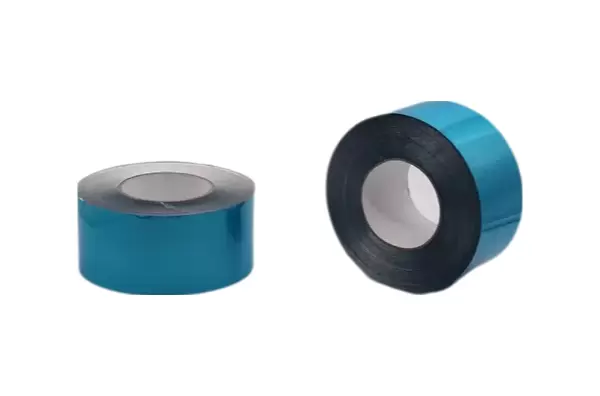
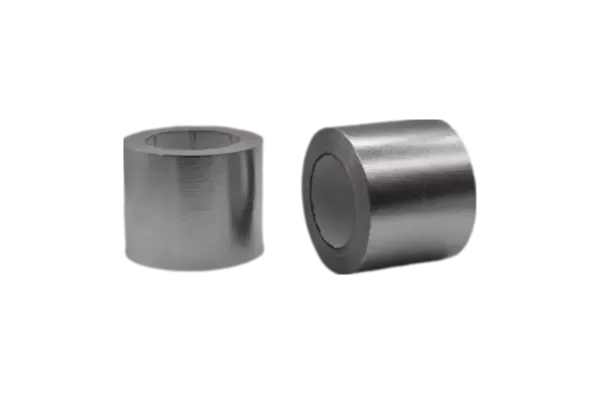
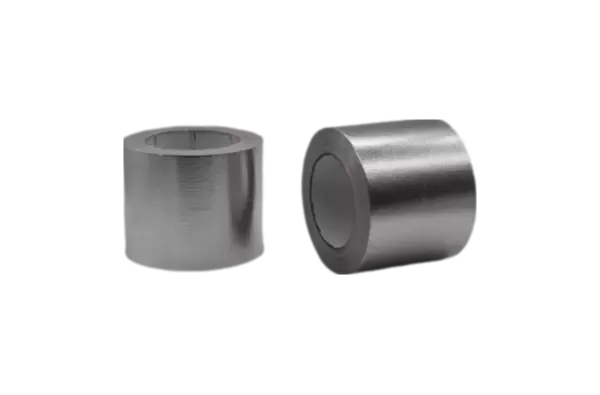
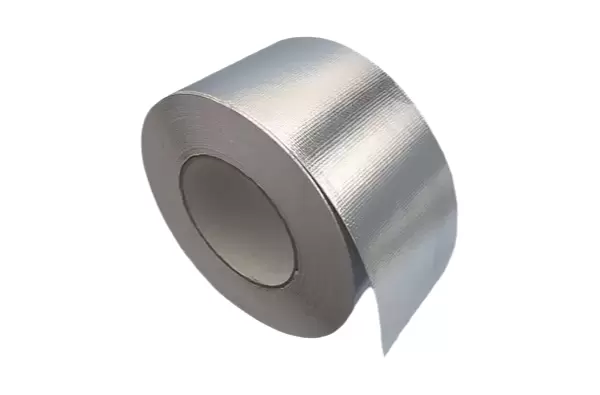
VC Heat-sealable Aluminum Foil Tape with Release Paper Liner is designed around these two bonding mechanisms. Its construction combines an aluminum foil substrate, a VC (Vinyl Composite) backing layer, a pressure-sensitive adhesive coating, and a release-treated liner. Each layer serves a different purpose, allowing the tape to support both conventional adhesive application and heat-activated bonding.
1. Understanding Pressure-Sensitive Adhesion in Aluminum Foil Tape
Pressure-sensitive adhesives (PSAs) are designed to form a bond when pressure is applied during contact with a suitable surface. Unlike heat-activated bonding systems, they do not normally require an additional heating stage to establish initial adhesion.
In aluminum foil tape applications, this characteristic makes PSA useful for positioning, temporary fixation, and component attachment during assembly. Once the release liner is removed, the exposed adhesive surface can be pressed against the target substrate.
The bonding process depends on several practical factors:
l Surface condition: Dust, oil, moisture, and loose particles can interfere with adhesive contact.
l Application pressure: Sufficient and evenly distributed pressure helps the adhesive establish contact with the substrate.
l Surface geometry: Curved, uneven, or narrow surfaces may require additional attention during application.
l Temperature: Application temperature can influence adhesive wetting and bonding behavior.
l Substrate compatibility: Different metals, coated surfaces, and polymer materials may produce different adhesion results.
For production teams, the main advantage of pressure-sensitive adhesion is its convenience. Operators can apply the tape without introducing a separate thermal bonding process, making it suitable for positioning components before subsequent manufacturing operations.
However, initial adhesion and permanent thermal bonding should not be treated as equivalent performance characteristics. A tape that adheres immediately under pressure may still require another bonding mechanism to meet the requirements of a particular assembly.
2. How Thermal Bonding Works Through the VC Backing Layer
Thermal bonding follows a different principle. Instead of relying exclusively on an adhesive surface that becomes tacky under pressure, a heat-responsive material develops a stronger connection when exposed to appropriate heat and pressure.
In this product construction, the aluminum foil has a VC coating on its backside. This layer is designed to thermally bond to compatible substrates under controlled processing conditions, forming a tight and permanent composite structure.
The process generally involves three important elements:
Heat activation
The VC backing layer is exposed to a suitable temperature. Heating allows the material to reach the condition required for bonding. The actual temperature range depends on the substrate, equipment, and processing conditions, so it should be established through application testing rather than assumed from the tape specification alone.
Pressure application
Pressure brings the VC-coated surface into close contact with the target material. Consistent contact is important because gaps, uneven surfaces, and insufficient pressure can affect the final bond.
Bond formation
After the appropriate heat and pressure treatment, the VC layer forms a close connection with the compatible substrate. Once the assembly has completed the required bonding and cooling process, the resulting structure is intended to remain firmly integrated.
This makes thermal bonding particularly relevant when the application requires more than simply holding a component in place during installation.
For engineers evaluating VC heat-sealable aluminum foil tape, the key consideration is that the VC backing and the pressure-sensitive adhesive perform different functions. The former supports heat-activated bonding, while the latter provides conventional pressure-sensitive adhesion on the opposite side.
3. Why Combine Two Bonding Mechanisms in One Tape Structure?
In practical manufacturing, adhesive fixation and permanent bonding often serve different stages of the same assembly operation.
Consider a production line assembling an internal heating component. Before final bonding, the operator may need to position a wire or secure a foil section accurately. Pressure-sensitive adhesion can help hold the material in place during this stage. If the assembly design also requires thermal bonding, the VC backing provides a separate bonding interface for the subsequent heat-sealing process.
Combining these functions in one tape structure offers several potential advantages.
First, it separates the initial positioning task from the final bonding task. Operators can handle the tape using a familiar pressure-sensitive application method before the VC layer undergoes thermal treatment.
Second, it provides greater flexibility when designing assembly sequences. Manufacturers can determine when to apply pressure, when to introduce heat, and how to integrate tape application into existing production equipment.
Third, the aluminum foil substrate provides a continuous metallic layer within the composite construction. Depending on the application design, this layer can contribute to barrier protection against moisture, air, oils, and UV radiation.
Nevertheless, the two bonding mechanisms should be evaluated independently. Pressure-sensitive adhesive performance does not automatically establish the thermal bonding strength of the VC layer. Both interfaces need to be tested under their intended operating conditions.
4. Application in Household Appliances: Fixing Internal Heating Resistor Wires
Household appliances often contain heating elements and associated electrical connections that require stable positioning within a limited installation space.
Heating resistor wires may need to be fixed along designated paths to maintain the intended assembly arrangement. Movement during transportation, installation, or subsequent operation can affect component positioning and potentially create problems for the surrounding structure.
In suitable appliance designs, heat-sealable aluminum foil tape can support this type of assembly through its combination of adhesive fixation and thermal bonding.
The pressure-sensitive adhesive can help secure the tape during initial installation. Meanwhile, the VC-coated backside can be used for thermal bonding where the target substrate and manufacturing process are compatible.
When evaluating this application, manufacturers should consider:
l Whether the tape width provides sufficient coverage for the designated fixing area.
l Whether the aluminum foil thickness is suitable for the assembly geometry.
l Whether the target substrate is compatible with the VC thermal bonding layer.
l Whether the operating temperature remains within the validated material limits.
l Whether the bonding process affects nearby electrical insulation materials or other sensitive components.
The product's resistance to high and low temperatures, chemical corrosion, and aging can also be relevant when assessing its suitability for appliance environments. However, actual operating temperature limits and service life should be confirmed through application-specific testing.
5. Application in New Energy Batteries: Cell Fixation and Module Sealing
Battery pack assembly presents another practical application for this dual-bonding construction.
Within a battery pack, cells are arranged in series or parallel configurations according to the electrical design. During assembly, selected connections and surrounding components may require insulation, positioning, or fixation. Battery module covers and casings may also require suitable sealing materials.
In these applications, the tape can be considered for two related purposes.
Insulation and fixation around battery cell connections
The aluminum foil tape can be incorporated into designated assembly areas where the material structure is compatible with the electrical and mechanical requirements. Its adhesive layer supports initial attachment, while the VC backing provides a thermal bonding option for suitable substrates.
Because battery systems involve electrical safety requirements, engineers must verify dielectric properties, electrical isolation, and compatibility with adjacent materials before using any aluminum foil tape near conductive components. Aluminum foil itself is electrically conductive and should not be treated as an electrical insulating material.
Sealing between battery module covers and casings
The VC layer may support bonding between compatible cover and casing materials under controlled heat and pressure. A properly designed sealing interface can help reduce the entry of environmental contaminants.
For battery manufacturers, the important point is to evaluate the entire assembly rather than relying on the tape's general barrier properties alone. Surface preparation, joint geometry, bonding consistency, and the thermal limits of nearby battery components all influence material selection.
6. Comparing the Two Bonding Mechanisms Through Product Parameters
When selecting industrial tape, engineers should examine measurable performance indicators rather than relying only on descriptions such as strong adhesion or permanent bonding.
The available specifications for this product include three configurations:
Parameter | 150 μm | 185 μm | 160 μm |
VC backing coating | VC | VC | VC |
Adhesive type | Solvent-based | Solvent-based | Rubber |
Release liner | PET | PET | Glassine paper |
Size (W × L) | 440 mm × 200 m | 70 mm × 50 m | 34 mm × 600 m |
180° peel strength | ≥7.5 N/cm | ≥7.5 N/cm | ≥7.5 N/cm |
Initial tack | ≥15# | ≥15# | ≥15# |
Holding power | ≥24 h | ≥24 h | ≥24 h |
Tensile strength | ≥30 N/cm | ≥20 N/cm | ≥20 N/cm |
Several details deserve attention when interpreting these values.
180° peel strength indicates the force required to peel the adhesive from a test surface under specified test conditions. It provides a reference for evaluating pressure-sensitive adhesion, but actual results depend on the substrate and testing method.
Initial tack reflects the adhesive's ability to establish contact quickly. This is particularly relevant to production operations where operators need the tape to remain positioned immediately after application.
Holding power evaluates resistance to displacement under a specified load and test environment. It helps assess whether an adhesive can maintain its position over time.
Tensile strength describes resistance to pulling forces. This parameter is useful when considering tape handling, installation, and mechanical loading during assembly.
These specifications should not be confused with the thermal bonding strength of the VC backing. The latter requires separate evaluation using the intended substrate and heat-sealing conditions.
The three configurations also demonstrate why product selection should consider more than total thickness. Adhesive type, liner material, roll dimensions, and tensile performance can influence production efficiency and application suitability.
7. Choosing Between PET and Glassine Release Liners
The release liner protects the pressure-sensitive adhesive before application. It is removed when the tape is ready to be installed.
This product is available with both PET and glassine paper liners, depending on the specification.
PET liners are used in the 150 μm and 185 μm configurations, while the 160 μm configuration uses glassine paper.
The selection should reflect the converting and assembly requirements. For example, manufacturers may consider liner handling, dimensional stability during processing, roll format, die-cutting requirements, and the method used to remove the liner during installation.
It is also important to distinguish the liner from the VC backing. The release-treated liner protects the adhesive-coated front surface, whereas the VC coating on the opposite side provides the heat-sealing function.
Keeping these two layers separate in the product specification helps prevent confusion during technical communication and procurement.
8. Manufacturing Consistency and Customization for Industrial Applications
Even when a tape meets its stated technical specifications, production consistency remains important. Variations in coating thickness, adhesive application, slitting accuracy, and material quality can affect how reliably the product performs in an automated or semi-automated assembly process.
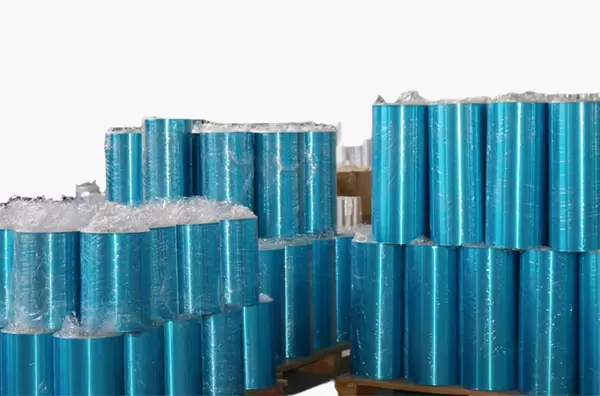
Jiangyin Biaotie Material Factory Co., Ltd. has specialized in aluminum foil tape manufacturing since 1980. With a production area of approximately 15,000 square meters and annual output of around 20 million square meters of various aluminum foil tapes, the company supports industrial customers requiring different material structures and product specifications.
Its manufacturing capabilities include coating and slitting operations with automated process controls. These improvements help manage production tolerances and maintain consistency across different tape configurations.
For specialized applications, Jiangyin Biaotie Material Factory Co., Ltd. can also evaluate customer requirements involving substrate selection, adhesive formulations, liner materials, and finished dimensions. This is particularly relevant when a standard roll configuration does not match the width, length, or assembly requirements of a specific production line.
The company's experience in international trade also supports communication with customers across different manufacturing markets. Rather than recommending a material based only on its nominal specifications, the selection process can begin with an understanding of the actual application, working environment, and processing method.
9. Storage and Handling Before Application
Proper storage helps maintain the condition of the adhesive and release liner before the tape enters production.
The recommended storage conditions for this product are:
l Temperature: -5°C to 40°C.
l Relative humidity: Below 80% RH.
l Storage environment: Cool and dry.
l Protection: Avoid direct sunlight and exposure to heat sources.
Rolls should be kept in suitable packaging and protected from contamination, excessive pressure, and unnecessary deformation. Before application, operators should inspect the liner and adhesive surface to ensure that the material has not been damaged during storage or transportation.
For production environments using thermal bonding, storage management should be coordinated with the assembly schedule so that the tape remains in suitable condition before processing.
Conclusion
Thermal bonding and pressure-sensitive adhesion solve different problems in industrial tape applications. Pressure-sensitive adhesive provides convenient initial attachment through contact and pressure, while the VC backing layer supports a separate heat-activated bonding process with compatible substrates.
The combination is particularly relevant to household appliance assembly and new energy battery manufacturing, where components may require both accurate positioning and a more permanent bonded interface.
For engineers and procurement teams evaluating VC Heat-sealable Aluminum Foil Tape with Release Paper Liner, the most important factors include substrate compatibility, thermal processing conditions, adhesive performance, liner selection, and the requirements of the finished assembly.
Working with an experienced manufacturer can also help narrow down suitable material configurations before production trials begin. With decades of aluminum foil tape manufacturing experience, Jiangyin Biaotie Material Factory Co., Ltd. provides product customization and technical communication for different industrial requirements.
Selecting the right VC heat-sealable aluminum foil tape should ultimately be based on the complete bonding process, not simply the adhesive strength of one surface.

 WhatsApp