Choosing the right tape for insulation work involves more than checking whether it has an aluminum foil surface. In HVAC ductwork, refrigeration equipment, industrial pipelines, and fire protection applications, the tape must remain attached under the expected temperature, humidity, and mechanical conditions. A product that performs well during installation may still cause problems if its adhesive cannot maintain a reliable bond or its backing tears when pulled around corners.
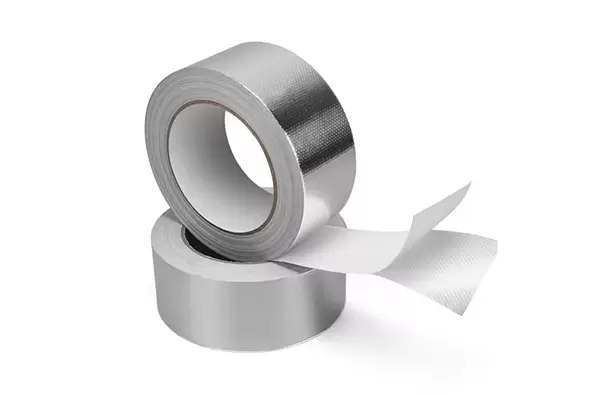
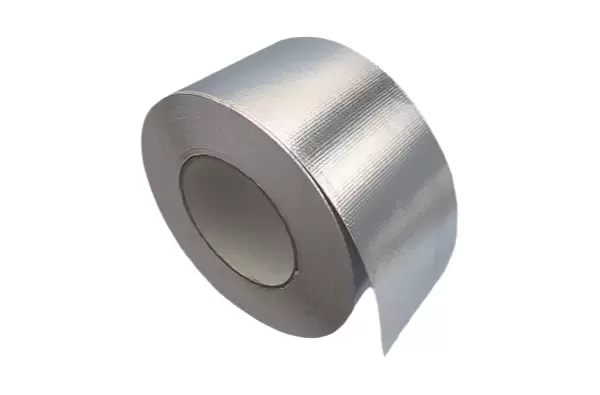
Reinforced Aluminum Foil Tape addresses several of these challenges by combining aluminum foil, a reinforcing scrim, a paper-based substrate, and pressure-sensitive adhesive. However, different constructions and adhesive formulations produce different performance characteristics. Buyers should compare total thickness, 180° peel strength, initial tack, holding power, and tensile strength before selecting a specification for their application.
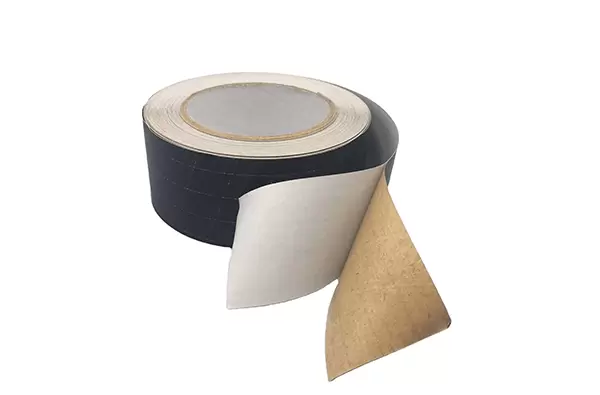
1. Start with the Application and Total Thickness
Thickness is one of the first specifications to check when evaluating reinforced foil tape. It affects how the tape handles during application, how it conforms to surfaces, and how much material is available to support the composite structure.
Two common specifications are 130 μm and 150 μm. Although the difference appears small, these products use different substrate constructions and adhesive systems, so thickness should not be evaluated in isolation.
The 130 μm option uses scrim-reinforced kraft paper with a water-based adhesive and a kraft paper release liner. Its listed 180° peel strength is at least 4 N/cm, with initial tack of at least 10, holding power of at least 24 hours, and tensile strength of at least 40 N/cm.
The 150 μm option uses a BOPP laminate with fiber-reinforced kraft paper, a solvent-based adhesive, and a white paper release liner. Its listed 180° peel strength is at least 6 N/cm, while the initial tack, holding power, and tensile strength requirements are the same as those of the 130 μm option.
For procurement teams, the key point is that a thicker tape is not automatically suitable for every installation. The backing, adhesive chemistry, and intended application all influence performance. A thinner construction may be sufficient for a particular insulation assembly, while a specification requiring higher peel strength may justify evaluating the 150 μm option.
Before confirming a purchase, identify the surface material, the expected service environment, the amount of handling during installation, and the mechanical demands placed on the tape. These details help narrow the available specifications more effectively than thickness alone.
2. Compare 180° Peel Strength for Bond Reliability
Peel strength measures the force required to separate an adhesive tape from a surface under a defined test method. For insulation wrapping, it provides a useful reference when comparing how strongly different tape constructions bond to a substrate.
The 130 μm specification has a minimum listed 180° peel strength of 4 N/cm, whereas the 150 μm specification has a minimum of 6 N/cm. This difference makes peel strength an important consideration when choosing between the two constructions.
However, laboratory peel values should not be treated as a direct guarantee of service performance. Actual adhesion depends on the surface condition, application pressure, adhesive compatibility, and environmental exposure. Dust, oil, condensation, and loose surface coatings can prevent the adhesive from making proper contact.
For example, when wrapping an insulated HVAC duct, installers should check that the foil-facing surface is clean, dry, and stable before applying the tape. Pressing the tape firmly along the full contact area helps reduce gaps and incomplete bonding. If the tape is applied over a dusty or damp surface, even a specification with a higher peel strength may not deliver the expected result.
For manufacturers and distributors, it is also worth confirming how peel strength is tested. Substrate type, application conditions, and test procedures can affect the results. When comparing samples from different suppliers, use consistent test conditions wherever possible.
3. Understand Initial Tack and Holding Power Separately
Initial tack and holding power describe different aspects of adhesive performance. Initial tack indicates how readily the adhesive forms a bond when it first contacts a surface. Holding power indicates its ability to resist movement or separation under specified test conditions over time.
Both properties matter during insulation installation.
A tape with suitable initial tack can make positioning and wrapping more manageable, particularly when workers need to secure an edge before completing the next section. Holding power becomes more relevant after installation, when the tape must maintain its position rather than gradually shifting under the conditions defined by the test.
The two listed reinforced foil tape specifications have an initial tack value of at least 10 and a holding power of at least 24 hours. The initial tack unit and test method should be confirmed against the manufacturer's technical documentation before these figures are used for formal specification comparisons.
It is equally important not to assume that a 24-hour holding-power result represents a guaranteed service life of 24 hours or establishes long-term durability by itself. A standardized holding-power test measures performance under defined conditions; it does not replace application-specific aging, temperature, or humidity evaluations.
For refrigeration and industrial plumbing projects, buyers should ask whether the adhesive system is suitable for the anticipated operating conditions. Where installations experience temperature changes or prolonged exposure to moisture, sample testing under representative conditions can help identify potential problems before large-scale purchasing begins.
4. Evaluate Tensile Strength and Reinforcement Structure
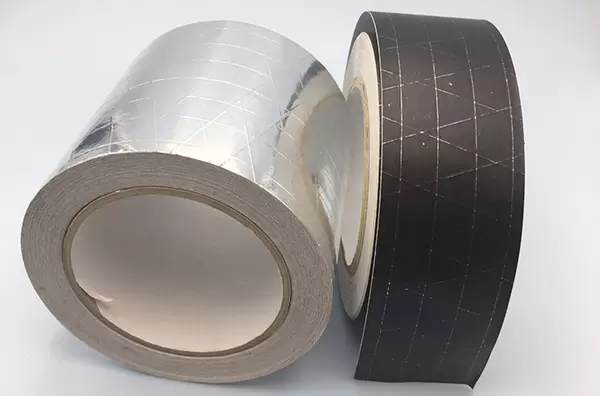
Pure aluminum foil tape and reinforced aluminum foil tape differ in their backing construction. Reinforced versions incorporate fiberglass or polyester scrim to improve tensile strength while retaining flexibility and toughness.
This reinforcement is useful when tape must withstand pulling forces during application or remain intact while being wrapped around insulation materials. It can also help reduce tearing associated with handling, especially when installers need to maintain tension while positioning the tape.
Both the 130 μm and 150 μm specifications listed above have a minimum tensile strength of 40 N/cm. Buyers should compare this value alongside the reinforcement material rather than assuming that the same tensile-strength figure means the products have identical handling characteristics.
Fiberglass and polyester reinforcements may behave differently depending on the construction and application. The appropriate choice depends on factors such as the required flexibility, the installation method, and the mechanical demands of the finished assembly.
When reviewing samples, check whether the tape can be unwound, cut, and applied without unnecessary tearing or distortion. Also inspect whether the foil and reinforcement remain integrated during normal handling. These practical checks complement the numerical data and help determine whether a product is suitable for the installation process.
5. Select the Adhesive System for the Working Environment
Adhesive selection is another important factor in reinforced foil tape procurement. The available specifications include a water-based adhesive and a solvent-based adhesive.
The 130 μm construction uses a water-based adhesive, while the 150 μm construction uses a solvent-based adhesive. Their different formulations and substrate structures should be considered together when selecting a product.
Neither adhesive category should automatically be regarded as better in every situation. The relevant questions are whether the adhesive bonds reliably to the intended surface, whether it meets the project's performance requirements, and whether the product is compatible with the working environment.
Storage and shelf life also deserve attention. Under the stated storage conditions, the water-based and flame-retardant adhesive products have a shelf life of six months, while solvent-based products have a shelf life of twelve months.
The recommended storage environment is cool and dry, at temperatures between -5°C and 40°C and relative humidity below 80%. Direct sunlight and exposure to heat sources should be avoided.
For distributors and industrial buyers, these details affect inventory planning. Purchasing quantities should reflect expected consumption and the time needed to transport, store, and use the tape. A suitable product can still become difficult to apply if it is stored outside the recommended conditions or retained beyond its stated shelf life.
6. Check Dimensional Tolerances and Roll Specifications
Technical performance is only part of the selection process. Roll dimensions and manufacturing tolerances also influence production planning, installation efficiency, and quality control.
The listed products include a 75 mm × 50 m format for the 130 μm construction and a 50 mm × 50 m format for the 150 μm construction. The available width should be matched to the overlap requirements, working space, and application method.
The stated dimensional tolerances are:
l Aluminum foil thickness: ±0.005 mm
l Total thickness: ±0.01 mm
l Width: ±0.5 mm
l Length: ±0.2 m
These values are relevant when buyers need consistency across repeated orders or use the tape as part of a standardized insulation process. For example, a production line applying tape to components of fixed dimensions may benefit from consistent roll width and predictable material usage.
When reviewing a supplier's quotation or technical data sheet, confirm whether the stated tolerances apply to the exact construction being purchased. If the project has additional requirements, such as a specific roll width or a different reinforcement structure, discuss those requirements before production begins.
7. Work with a Manufacturer on Application-Specific Requirements
Standard specifications provide a starting point, but not every insulation project uses the same substrate, adhesive, or installation method. Buyers may need to consider material compatibility, climatic conditions, production tolerances, and the availability of suitable roll formats.
Jiangyin Biaotie Material Factory Co., Ltd. has specialized in tape manufacturing since 1980 and brings more than 25 years of international trade experience. Its production facility covers 15,000 m², with annual output of approximately 20 million m² of various aluminum foil tapes.
The company's approach emphasizes communication about the customer's application before finalizing technical recommendations. This can be useful when evaluating whether an existing tape specification is suitable or whether adjustments to the substrate or adhesive formulation should be considered.
For reinforced foil tape projects, buyers should provide practical details such as the material being wrapped, the operating environment, the required roll dimensions, and any applicable performance standards. Where possible, samples should be tested using the actual substrate and installation process.
Manufacturing controls also matter. Biaotie has invested in automated production equipment, upgraded coating and slitting capabilities, and production management systems to improve process control. For buyers sourcing tape repeatedly, consistent manufacturing conditions and clear communication about tolerances are important parts of supplier evaluation.
Rather than selecting a product based on a single headline specification, procurement teams should compare the complete technical profile and verify that the proposed construction fits the application.
8. Use a Practical Checklist Before Placing an Order
Before confirming an order for Reinforced Aluminum Foil Tape, review the following points with the supplier:
(1) Application: Identify whether the tape will be used for HVAC insulation, refrigeration, industrial pipelines, home appliances, or infrastructure fire protection.
(2) Thickness and construction: Confirm the total thickness and whether the substrate uses scrim-reinforced kraft paper or a BOPP laminate with fiber-reinforced kraft paper.
(3) Adhesion: Compare the specified 180° peel strength and verify the initial tack test method.
(4) Mechanical performance: Check tensile strength and determine whether the reinforcement provides sufficient resistance to handling forces.
(5) Environmental compatibility: Confirm that the adhesive and tape construction are suitable for the expected operating conditions.
(6) Dimensions: Verify roll width, length, and dimensional tolerances.
(7) Storage and shelf life: Check the adhesive type, recommended storage conditions, and delivery schedule.
(8) Quality verification: Request technical documentation and samples where application-specific testing is necessary.
These checks help reduce the risk of choosing a tape that meets one numerical requirement but fails to meet the broader needs of the installation.
Ultimately, selecting reinforced foil tape requires balancing thickness, adhesion, reinforcement, and environmental compatibility. The 130 μm and 150 μm specifications provide two distinct starting points, but the final choice should be based on the actual working conditions and verified product performance.
With clear technical requirements and communication with an experienced manufacturer such as Jiangyin Biaotie Material Factory Co., Ltd., buyers can make more informed decisions, improve consistency between orders, and select a reinforced tape construction suited to their insulation and industrial application needs.

 WhatsApp