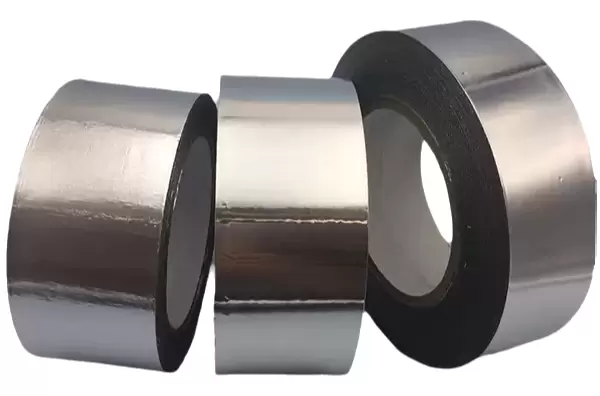
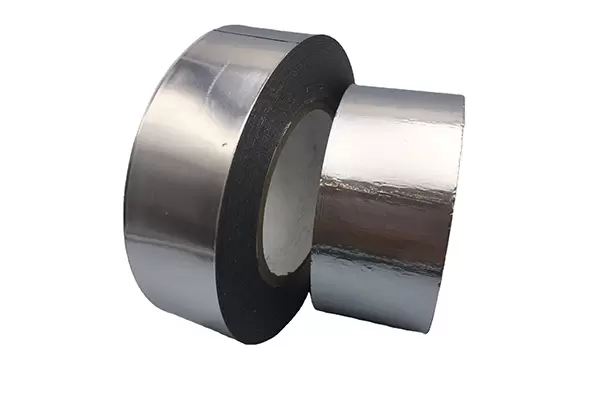
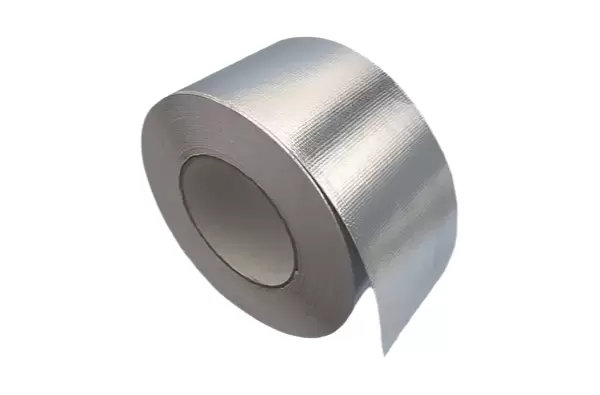
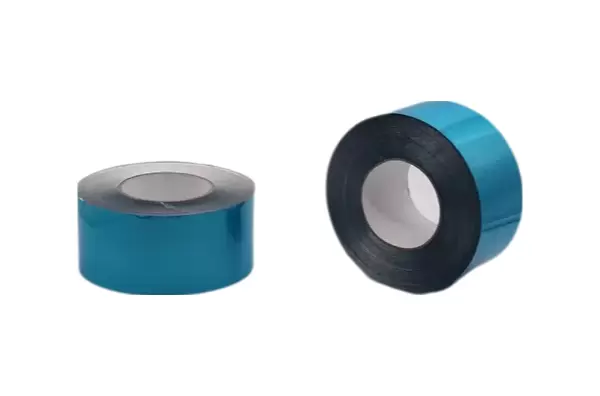
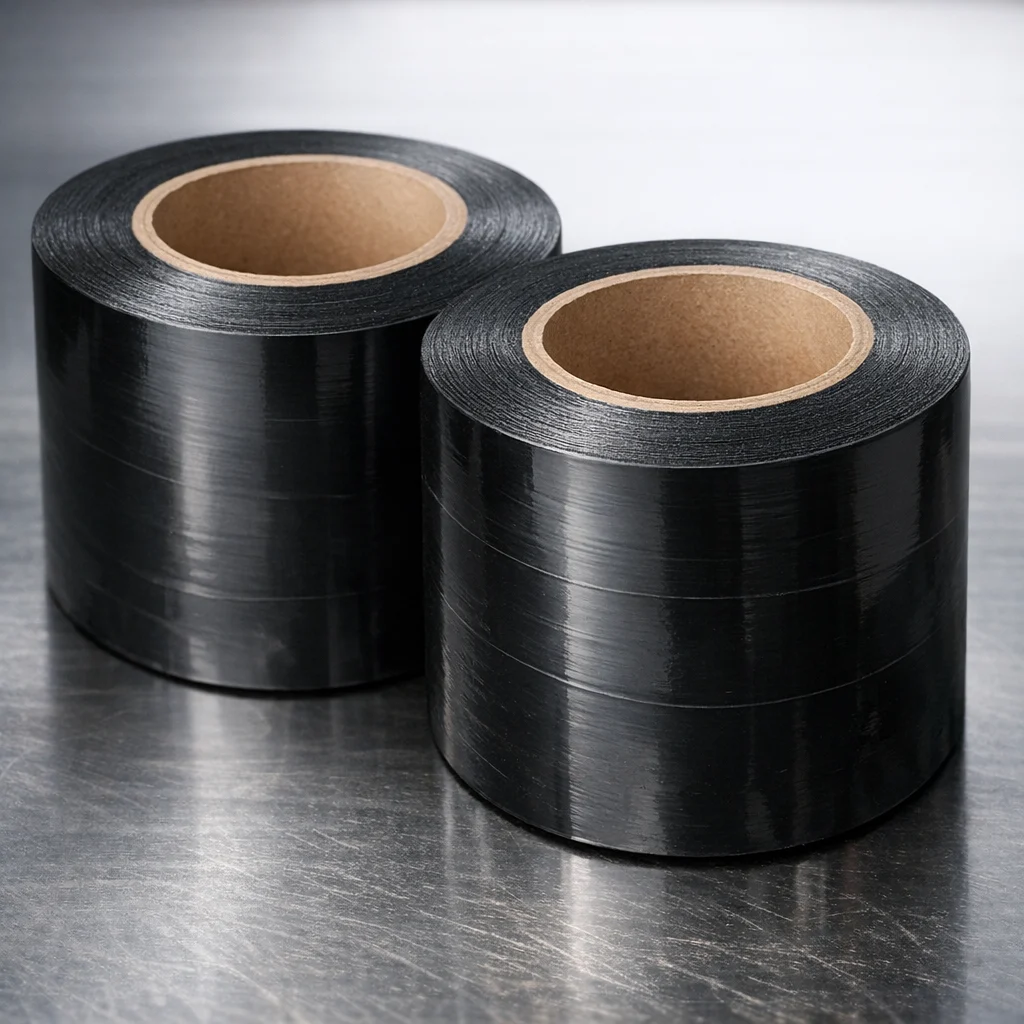
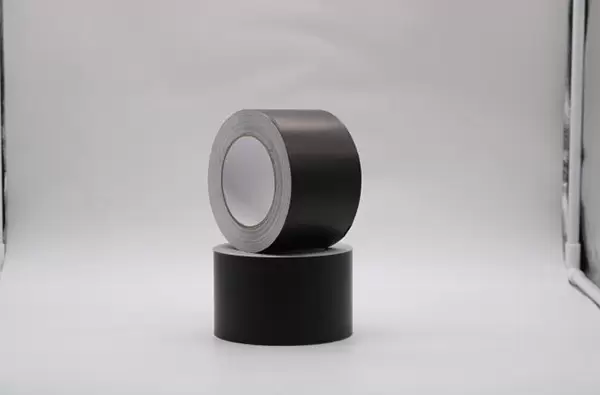
PU Foam-Bondable Liner-Free Aluminum Foil Tape is designed for applications where aluminum foil tape needs to become part of a polyurethane (PU) foam insulation system rather than simply adhere to a surface. Its structure combines an aluminum foil substrate, a specialized release coating on the backside, and a rubber-based pressure-sensitive adhesive on the front side. This combination allows the tape to perform different bonding functions on opposite surfaces while maintaining the barrier properties expected from aluminum foil.
The key to its compatibility with PU foam lies in the backside coating. Unlike a conventional release coating that is mainly designed to prevent adhesion, this specialized layer maintains release characteristics while also allowing thermal bonding with polyurethane foam. When PU foam is injected or formed against the coated aluminum foil, heat activates the bonding interface, allowing the foil tape to become securely integrated with the foam structure.
How the Bonding Structure Works
PU foam is widely used as an insulation material because its cellular structure provides low thermal conductivity. However, the performance of an insulated assembly depends not only on the foam itself but also on how effectively the surrounding materials are connected.
A conventional aluminum foil tape may provide good surface coverage and reflect radiant heat, but its adhesive layer is not necessarily designed to bond directly with injected PU foam. If the interface between the foil and foam is weak, gaps can form during manufacturing or service. These gaps can reduce insulation efficiency and allow air or moisture to enter the assembly.
The structure of PU Foam-Bondable Liner-Free Aluminum Foil Tape addresses this interface problem. The aluminum foil acts as a continuous barrier layer, while the PU-compatible backside coating provides a bonding surface that can interact with polyurethane during thermal processing. Instead of treating the foil tape and PU foam as two independent materials, the design allows them to function as a connected insulation system.
The front side uses a rubber-based pressure-sensitive adhesive. This gives manufacturers another practical bonding option when the aluminum foil needs to be fixed to other components during assembly. As a result, the tape can provide both processing convenience and a reliable PU foam bonding interface.
Why Aluminum Foil Matters in PU Foam Insulation
Aluminum foil contributes a property that PU foam cannot provide by itself: high reflectivity for radiant heat. The aluminum surface can reflect up to 97% of radiant heat under suitable conditions, helping reduce heat transfer through radiation.
PU foam, meanwhile, primarily contributes thermal resistance by limiting heat transfer through conduction and convection within its cellular structure. Combining these two functions creates a more comprehensive insulation structure.
This is particularly useful in refrigeration equipment. A refrigerator or freezer needs to maintain a significant temperature difference between its internal and external environments. The insulation system must therefore limit heat transfer while also protecting the internal structure from air and moisture penetration.
When aluminum foil is securely bonded to PU foam, the foil can work as a continuous thermal and protective barrier while the foam provides the main insulating layer. A weak interface would compromise this combination, which is why PU foam compatibility is an important consideration when selecting aluminum foil tape for insulation production.
Sealing Performance at the Foam Interface
A reliable PU foam bonding layer also contributes to sealing performance. Refrigeration systems and insulated building components can be affected by air leakage, moisture penetration, and dust contamination. These issues are particularly undesirable where insulation materials need to remain protected throughout long-term service.
The specialized backside coating of PU Foam-Bondable Aluminum Foil Tape is designed to achieve secure thermal adhesion with PU foam while maintaining the required release properties before processing. Once properly bonded, the interface helps create a more continuous barrier against air, moisture, and dust particles.
The actual bonding result depends on processing conditions, foam formulation, surface preparation, temperature, and production equipment. Therefore, manufacturers should validate the bonding process under their actual production conditions rather than relying only on nominal tape specifications.
Durability Beyond Initial Bonding
For industrial insulation applications, bonding strength is only one part of tape performance. The material also needs to withstand handling, cutting, forming, and installation without unnecessary breakage.
The PU foam-bondable release layer can improve the overall flexibility and durability of aluminum foil tape structures, particularly when used with BOPP- or PE-laminated aluminum foil. These combinations can provide better resistance to acid and alkali corrosion while reducing the risk of tape breakage during application.
This matters during high-volume manufacturing. A tape that performs well in laboratory bonding tests but breaks frequently during slitting, handling, or installation can create production interruptions and material waste. Maintaining an appropriate balance between tensile strength, flexibility, adhesive performance, and thickness is therefore important for practical use.
The available specifications cover different constructions and sizes. For example, the listed total thickness options include 60 μm, 75 μm, 80 μm, and 120 μm, with different film structures including BOPP and PE. The standard data shows 180° peel strength of at least 7.5 N/cm and initial tack of at least 15#, while holding power is at least 24 hours for the listed constructions.
Refrigeration Applications
Refrigeration is one of the most direct applications for this type of aluminum foil tape. During refrigerator and freezer production, PU foam is commonly used to fill the insulation space between structural components. Aluminum foil tape can be applied around condenser pipes and panels before or during the insulation process.
The tape needs to remain securely connected to the PU foam after injection and curing. If the interface separates, the insulation system may develop unwanted voids or discontinuities. A PU-compatible thermal bonding layer helps reduce this risk by creating a stronger connection between the foil surface and the surrounding foam.
For manufacturers, this also means that tape selection should be considered together with the foam injection process. Temperature, bonding time, material thickness, and the condition of the aluminum surface can all influence the final result.
Building Insulation Applications
The same principle applies to construction insulation. Spray PU foam can be used around wall assemblies and other building components where thermal insulation is required. Aluminum foil tape can provide an additional reflective barrier while helping protect joints and insulation interfaces.
In these applications, the tape must be selected according to the actual substrate, environmental exposure, installation method, and required mechanical performance. A suitable PU foam-bondable structure can provide a more integrated connection between the aluminum barrier and foam insulation, helping improve the continuity of the insulation layer.
Choosing the Right Specification
Different insulation systems require different tape constructions. Width, length, total thickness, film type, and tensile strength should all be considered before production.
For example, the product specifications include constructions such as 80 μm aluminum foil tape with BOPP film, 120 μm versions with PE film, and unlaminated structures in several thicknesses. Width and roll length can also vary significantly, from narrower 34 mm × 50 m formats to larger 1000 mm × 2000 m specifications.
Dimensional tolerances should also be considered in production planning. The stated tolerance is ±0.005 mm for aluminum foil thickness, ±0.01 mm for total thickness, ±0.5 mm for width, and ±0.2 m for length. These parameters are useful when the tape is incorporated into automated processing or assemblies with defined dimensional requirements.
Storage conditions should not be overlooked. The tape should be stored in a cool, dry environment at room temperature, with a recommended temperature range of -5°C to 40°C and relative humidity below 80% RH. Direct sunlight and heat sources should be avoided to help maintain consistent material performance before use.
Manufacturing Experience Behind Application-Specific Tape
Selecting the right tape is not always a matter of choosing the highest adhesive strength. The substrate, adhesive, coating structure, processing temperature, insulation material, and final application all need to work together.
Jiangyin Biaotie Material Factory Co., Ltd. has specialized in aluminum foil tape manufacturing since 1980. With 45 years of experience in the tape industry and more than 25 years of international trade experience, the company works with customers across Europe, Southeast Asia, Central Asia, and North America.
Its approach focuses on application details before recommending a tape structure. Customer requirements can be evaluated according to application conditions and local climatic factors, with technical parameters adjusted where necessary. The company can also recommend changes to substrates or adhesive formulations when a different material structure may improve service life, manufacturing efficiency, or application performance.
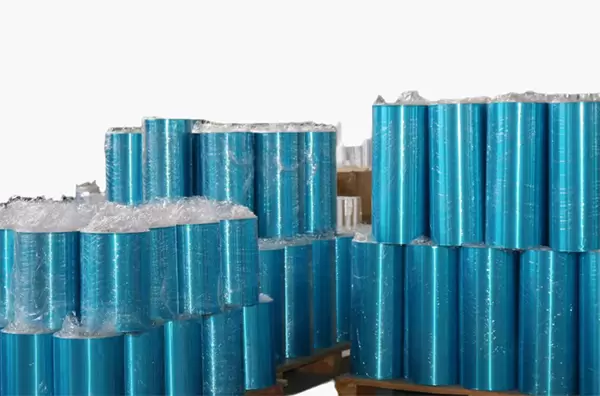
With a production area of approximately 15,000㎡ and annual production of various aluminum foil tapes reaching 20 million ㎡, the manufacturer has developed capabilities covering coating, slitting, material selection, and product customization. Production equipment is also being upgraded with greater automation and program control to improve dimensional accuracy and reduce human error.
For specialized PU foam insulation requirements, this manufacturing experience can be useful when the standard tape specification does not fully match the customer's production process. Raw materials and adhesive formulations can be adjusted according to the required application, while samples can be evaluated before larger-scale production.
A Practical Approach to PU Foam Bonding
The compatibility between aluminum foil tape and PU foam ultimately comes down to interface design. Aluminum foil provides a reflective and protective barrier, PU foam provides insulation, and the specialized backside coating creates the thermal bonding interface that connects the two materials.
For refrigeration systems, wall insulation, and other applications involving injected or sprayed polyurethane foam, this structure can provide a more reliable combination of thermal insulation, sealing, and mechanical durability than a conventional aluminum foil tape intended only for surface adhesion.
When evaluating PU Foam-Bondable Liner-Free Aluminum Foil Tape, manufacturers should therefore look beyond the adhesive label and examine the complete construction, including the aluminum foil, backside bonding layer, front-side adhesive, film structure, thickness, tensile strength, and processing conditions. This approach makes it easier to select a tape that works as part of the complete insulation system rather than as a standalone adhesive material.

 WhatsApp