Electromagnetic interference is rarely caused by one obvious fault. In server cabinets, communication base stations, control enclosures, and medical equipment, interference can enter or escape through small openings, panel joints, cable access points, and poorly connected shielding surfaces.
A metal cabinet may provide effective shielding across most of its enclosure, but its overall performance can still be weakened by seams, removable panels, service openings, or areas where different materials meet. These local weak points are where shielding tapes are often used.
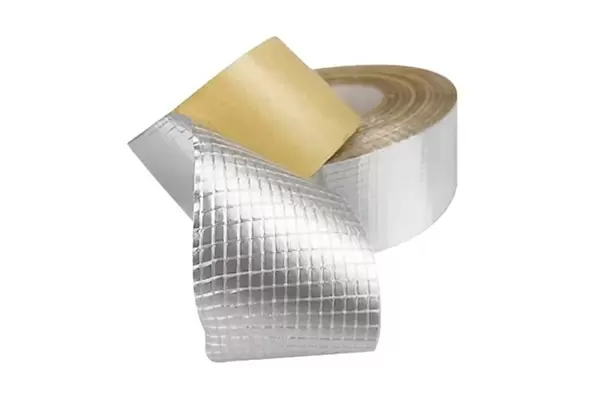
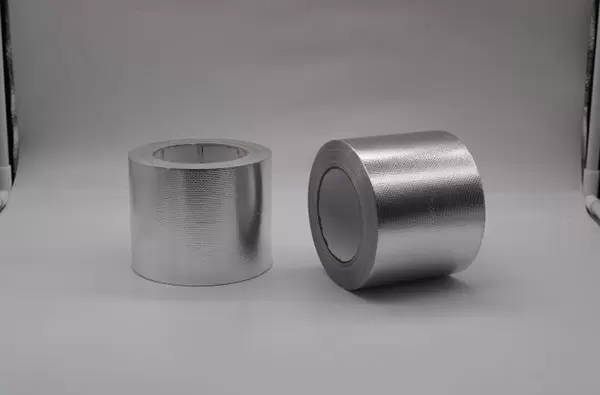
Fiberglass Cloth Aluminum Foil Tape provides an aluminum foil surface combined with a reinforced fiberglass cloth substrate. The tape is coated with high-performance pressure-sensitive adhesive and supplied with release paper or film for processing and application. In EMI shielding projects, it can be used to cover cabinet joints, reinforce shielding layers, protect equipment panel seams, and support local electromagnetic interference control.
It should be understood as a supporting material within a complete shielding design. Its effectiveness depends on the tape structure, adhesive system, installation method, surface condition, grounding design, and the frequency range involved.
Why Small Gaps Matter in EMI Shielding
Electronic and communication equipment often operates with multiple signal sources in a compact enclosure. Power supplies, processors, switching circuits, cables, antennas, and control modules may all generate or receive electromagnetic energy.
The metal housing of the equipment helps contain this energy. However, a shielding enclosure is only as effective as its weakest point. Even a narrow panel gap can interrupt the continuity of the metal surface.
Common weak points include:
These openings may allow electromagnetic energy to pass through the enclosure more easily. Covering or reinforcing them with a suitable foil tape can help improve the continuity of the shielding surface.
Fiberglass Cloth Aluminum Foil Tape is useful in these areas because the aluminum foil provides a metallic barrier, while the fiberglass cloth reinforcement helps the tape remain stable during installation and long-term use.
The Role of the Aluminum Foil Layer
Aluminum foil is widely used in shielding structures because it provides a conductive metallic surface. When applied correctly, it can help reflect and redirect electromagnetic energy rather than allowing it to pass freely through an opening.
In a tape format, the aluminum foil layer can be applied over narrow seams, panel edges, or small gaps that would be difficult to cover with rigid sheet metal. This makes the material suitable for local shielding work and enclosure finishing.
For example, the tape may be placed over the joint between two metal panels in a server cabinet. It can also be applied around a removable equipment cover or used to reinforce the edge of an existing shielding layer.
The foil layer should maintain sufficient contact with the surrounding shielding surface. Poor surface preparation, large wrinkles, loose edges, or interrupted contact can reduce the value of the installation.
For this reason, EMI shielding tape application requires more than simply attaching the tape to a visible gap. The installer must consider surface cleanliness, overlap width, pressure during application, and the relationship between the tape and the cabinet grounding structure.
Why Fiberglass Reinforcement Is Useful
Plain aluminum foil is thin and can be easily torn during handling. This becomes a problem around sharp panel edges, cable openings, corners, and areas that may be accessed during maintenance.
Fiberglass cloth reinforcement improves the mechanical stability of the tape. It provides higher tensile strength and better tear resistance than standard unsupported foil tapes.
This reinforcement offers several practical advantages in EMI shielding applications:
Lower risk of tearing during installation
Better handling across long cabinet seams
Greater stability around corners and panel edges
Improved resistance to movement during maintenance
More reliable coverage over irregular surfaces
Reduced damage when the tape is pressed or repositioned
The fiberglass layer does not replace the shielding function of the aluminum foil. Instead, it helps the foil surface remain intact and properly positioned.
This distinction is important. In many equipment environments, the shielding layer must continue working after repeated opening, inspection, vibration, or temperature changes. A reinforced structure can make the tape more suitable for these demanding conditions.
EMI Shielding for Server Cabinets
Server cabinets contain processors, power supplies, switches, storage equipment, and high-speed data connections. These components can generate electromagnetic noise, while sensitive electronics inside the cabinet may also be affected by external interference.
The cabinet itself provides the main shielding enclosure. However, doors, side panels, ventilation openings, cable entry points, and assembly seams can interrupt the continuity of that enclosure.
Fiberglass Cloth Aluminum Foil Tape may be used to reinforce selected cabinet areas, including:
Seams between metal panels
Edges of removable covers
Local gaps around cable access areas
Connections between foil shielding layers
Modified or repaired cabinet sections
The reinforced tape can follow cabinet edges and irregular joints more easily than rigid metal components. Its pressure-sensitive adhesive also allows it to be applied without additional mechanical fasteners in suitable locations.
The tape should not cover ventilation openings that are required for cooling. Shielding design must balance electromagnetic control with airflow, equipment access, and maintenance needs.
Applications in Communication Base Stations
Communication base stations contain radio-frequency equipment, power systems, control modules, cables, and signal-processing components. The equipment enclosure must help manage both internally generated interference and external electromagnetic sources.
In these systems, small gaps around cabinet panels or service openings may affect shielding continuity. Fiberglass Cloth Aluminum Foil Tape can be used for local reinforcement where a flexible metallic covering is required.
Possible application points include:
The tape’s fiberglass reinforcement is particularly useful where installation surfaces are uneven or where workers must apply pressure around corners and narrow sections.
Communication equipment can also generate heat. The tape is suitable for long-term use within a temperature range of -30°C to 200°C, making it appropriate for many equipment environments where ordinary light-duty tapes may become unstable.
However, operating temperature is only one selection factor. Engineers should also evaluate conductivity requirements, adhesive performance, grounding continuity, humidity, and the electromagnetic frequency range of concern.
Supporting Shielding in Medical Equipment
Medical equipment often contains sensitive sensors, signal-processing circuits, monitors, power modules, and communication components. Electromagnetic interference may affect signal quality or equipment stability, particularly in systems that process low-level electrical signals.
The equipment housing is normally designed as part of a broader electromagnetic compatibility system. Fiberglass Cloth Aluminum Foil Tape can support this design by reinforcing local enclosure joints and covering small shielding gaps.
Typical uses may include:
Internal equipment panel seams
Shielding layer overlaps
Small gaps around access panels
Local reinforcement around electronic modules
Protection of existing foil shielding surfaces
The tape’s reinforced construction helps reduce tearing during equipment assembly and maintenance. This can be useful in devices where internal components may need to be accessed without damaging the surrounding shielding materials.
For regulated medical equipment, material selection and installation must follow the applicable product design, testing, and compliance requirements. The tape should therefore be evaluated as one component of the complete electromagnetic compatibility solution.
Applying the Tape Across Panel Seams
A panel seam may look simple, but poor tape application can create uneven shielding coverage. Several practical steps can improve installation quality.
The application surface should first be cleaned to remove oil, dust, moisture, and loose particles. Contamination can reduce adhesive contact and cause the tape edges to lift.
The tape should extend beyond the seam on both sides. A consistent overlap helps maintain a continuous foil surface across the joint. Installers should avoid excessive wrinkles, folds, and air pockets, especially along the centre of the seam.
Firm and even pressure should be applied after positioning. This helps the pressure-sensitive adhesive contact the panel surface more completely.
Around corners or irregular openings, the tape should be shaped carefully rather than stretched aggressively. Fiberglass reinforcement improves tear resistance, but proper handling is still necessary to avoid damaging the foil surface.
Where several tape sections meet, sufficient overlap should be maintained. Uncovered spaces between tape pieces can become new shielding weak points.
Adhesive Selection and Electrical Continuity
The product can be manufactured with flame-retardant, solvent-based, or water-based adhesive systems. The suitable adhesive depends on the equipment environment, surface material, operating temperature, and safety requirements.
It is important to distinguish between mechanical adhesion and electrical continuity. A tape may adhere strongly to a surface without creating the required conductive path across the entire joint.
For EMI shielding projects, buyers should confirm whether the selected tape construction meets the project’s electrical requirements. Depending on the application, this may include checking:
Surface conductivity
Conductive contact between foil and enclosure
Adhesive electrical properties
Grounding method
Contact resistance
Frequency-specific shielding performance
The available product information describes the composite tape structure and its EMI shielding applications, but exact shielding effectiveness should be verified through testing under the intended installation conditions.
This avoids overstating the role of the tape and helps engineers select the correct construction for the equipment.
Temperature and Mechanical Stability
Electronic equipment may operate continuously and generate internal heat. Communication cabinets may also be installed in environments exposed to seasonal temperature changes.
Fiberglass Cloth Aluminum Foil Tape is suitable for long-term use from -30°C to 200°C. This temperature range helps the tape maintain structural stability in many electronics and communication equipment environments.
The fiberglass reinforcement also provides strong tensile and tear resistance. This can be especially useful in cabinets subject to vibration, panel movement, servicing, or repeated access.
Dimensional consistency is another important consideration for industrial processing. The stated tolerance range includes:
These tolerances help manufacturers plan cutting, converting, and repeatable installation more accurately.
Storage and Shelf-Life Requirements
Proper storage helps preserve adhesive and release performance before the tape is used. The recommended storage temperature is between -5°C and 40°C, with relative humidity below 80% RH.
Tape rolls should be kept in a cool, dry area away from direct sunlight and heat sources. Packaging should remain closed until the material is needed, especially in dusty or humid production environments.
Water-based and flame-retardant adhesive versions have a shelf life of 6 months. Solvent-based versions have a shelf life of 12 months when stored under suitable conditions.
Before application, older stock should be checked for edge lifting, liner release changes, surface contamination, or reduced tack.
A Supporting Material in Complete EMI Control
Effective EMI shielding normally involves enclosure design, grounding, conductive joints, filtered cable entries, shielding gaskets, ventilation treatment, and proper component layout. No single tape can replace all of these measures.
Fiberglass Cloth Aluminum Foil Tape is most valuable when used for a clear and controlled purpose: covering small enclosure gaps, reinforcing panel seams, connecting local shielding surfaces, and protecting foil layers that require better mechanical strength.
Its aluminum foil surface supports electromagnetic shielding, while the fiberglass cloth improves durability and handling. These combined properties make it suitable for server cabinets, communication base stations, medical equipment, and other electronic enclosures where standard foil tape may tear too easily.
When selected according to the required electrical, mechanical, and environmental conditions, fiberglass cloth aluminum foil tape can become a useful part of a practical EMI shielding system.

 WhatsApp