When aluminum foil tape is used inside an appliance, battery pack, or other industrial assembly, adhesive strength is only one part of the performance equation. The tape also needs to stay intact during handling, resist environmental exposure, and maintain a reliable bond after installation. For this reason, tensile strength and peel strength are two practical specifications that buyers should consider when selecting an aluminum foil tape for industrial use.
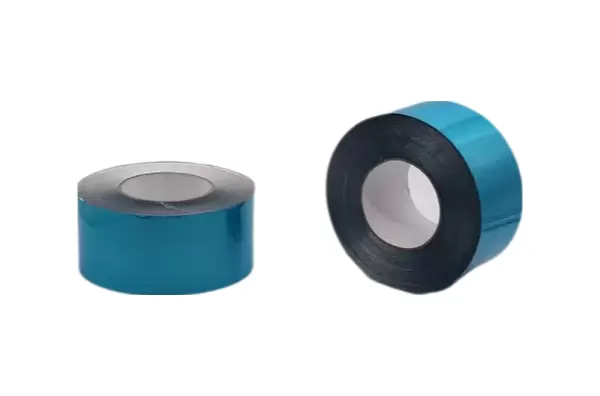
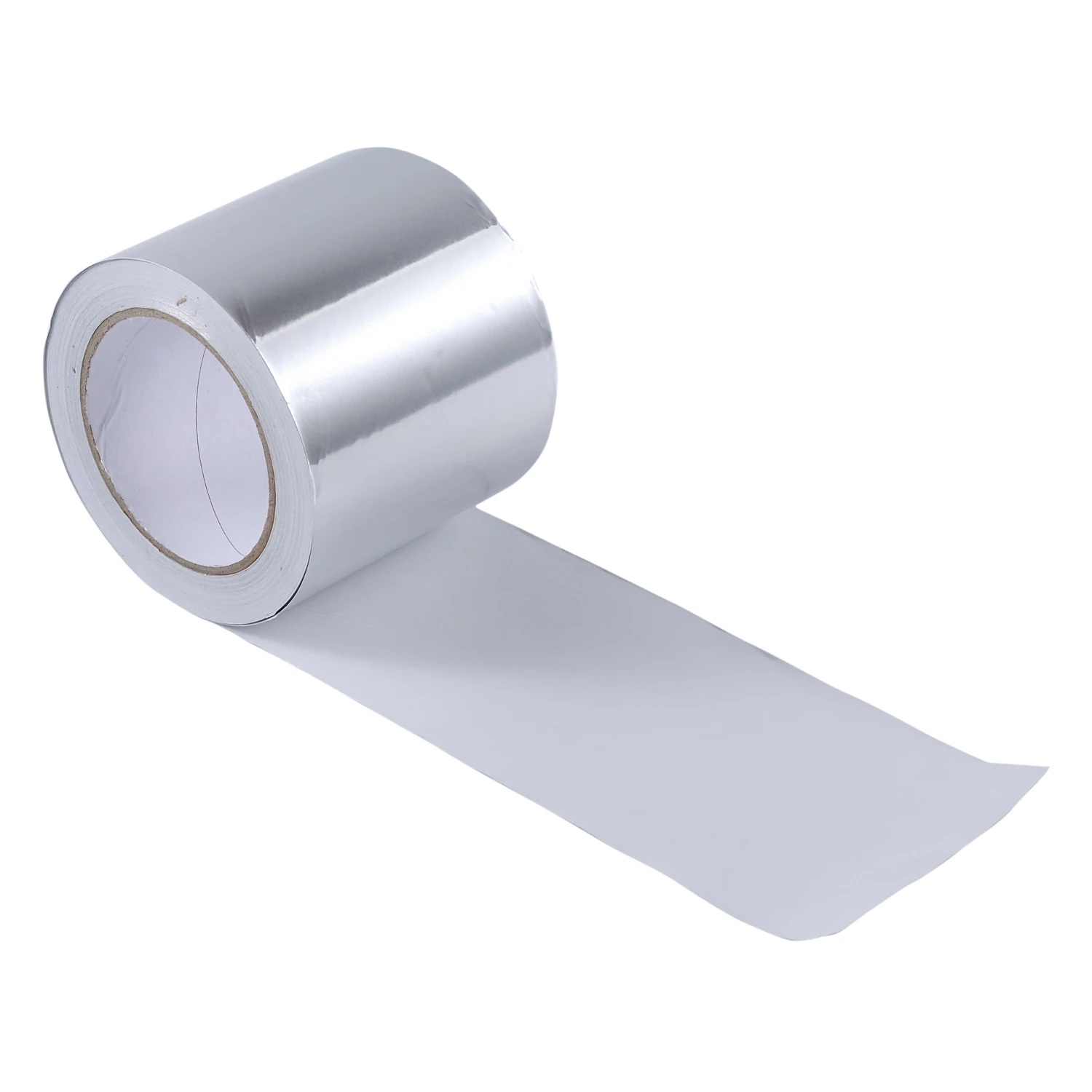
The VC Heat-sealable Aluminum Foil Tape is designed around this type of application requirement. It combines an aluminum foil substrate with a VC (Vinyl Composite) backing layer, a pressure-sensitive adhesive, and a release-treated liner. This construction allows the tape to provide both adhesive fixation and heat-sealing capability, making it suitable for applications where the tape needs to remain securely attached while also forming a more permanent composite structure under heat and pressure.
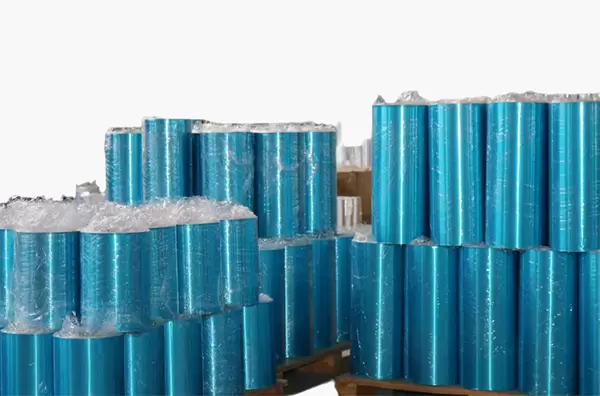
Why Tensile Strength Matters in Aluminum Foil Tape
Tensile strength describes how much pulling force a tape can withstand before it breaks. For aluminum foil tape, this property is particularly relevant because the foil substrate is thin and can be exposed to tension during converting, installation, wrapping, positioning, or subsequent assembly.
A tape with sufficient tensile strength is easier to handle during production. Operators can pull, align, cut, and apply the material without excessive stretching or tearing. In automated production lines, tensile performance can also affect how consistently the tape moves through dispensing and laminating equipment.
The technical specifications of this product include different tensile strength levels depending on the construction. For example, the 150 μm version has a listed tensile strength of ≥30 N/cm, while the 185 μm and 160 μm versions are specified at ≥20 N/cm. These differences show why tape selection should be based on the actual application rather than thickness alone.
A thicker tape does not automatically mean that it is the correct solution for every installation. The foil thickness, adhesive system, backing material, and intended bonding process all contribute to the final performance.
Understanding 180° Peel Strength
Tensile strength measures the resistance of the tape itself, while peel strength evaluates the force required to separate the adhesive from the bonded surface. In practical production, these are different problems.
For the listed constructions, the 180° peel strength is ≥7.5 N/cm. This provides a measurable reference for evaluating how firmly the pressure-sensitive adhesive attaches to a suitable substrate.
Peel strength becomes especially important when tape is used to secure components that may experience vibration, movement, thermal cycling, or handling forces. If the adhesive bond is too weak, the tape may lift from an edge even when the aluminum foil itself remains intact.
At the same time, peel strength should not be considered in isolation. Surface condition, substrate material, application pressure, temperature, contamination, and contact area can all influence the actual bonding result. A laboratory peel-strength value provides a useful benchmark, but production conditions still need to be considered when selecting the tape.
The VC Heat-sealable Aluminum Foil Tape combines a pressure-sensitive adhesive on the front side with a VC backing layer on the opposite side. This construction allows the pressure-sensitive side to provide initial attachment, while the VC layer can be thermally bonded to a compatible substrate when heat and pressure are applied.
Initial Tack and Holding Power Have Different Roles
Another useful way to evaluate industrial tape is to separate initial tack from holding power.
Initial tack refers to how quickly an adhesive develops adhesion when it first contacts a surface. This matters during assembly because the tape needs to stay in position before the next production step is completed.
Holding power, on the other hand, relates to the adhesive's ability to resist movement over time under a sustained load. The listed products provide an initial tack specification of ≥15# and holding power of ≥24 h.
These two properties can become important in different stages of production. A tape may need enough initial tack to remain attached immediately after application, while its holding power becomes more relevant when the assembly remains under stress for an extended period.
For industrial buyers, looking at these specifications together gives a more realistic understanding of adhesive behavior than relying on a single adhesion number.
Heat-Sealing Adds Another Layer of Functionality
One of the more application-specific characteristics of this tape is its VC backing layer. Under suitable heat and pressure, the VC material can thermally bond with compatible substrates, creating a tight and more permanent composite structure.
This is useful when pressure-sensitive adhesion alone is not enough for the final assembly. The initial adhesive can help position and secure the tape, while the heat-sealing step can reinforce the connection.
This feature is particularly relevant in household appliances and battery-related applications. For example, the tape can be used for thermal sealing and fixation of internal heating resistor wires in household appliances. In new energy battery packs, it can be used for insulation and fixation around series or parallel cell connections, as well as sealing between battery module covers and casings.
The actual processing temperature, pressure, dwell time, and substrate compatibility should be evaluated according to the specific assembly process rather than assumed from the tape construction alone.
Barrier Performance Is Also Important
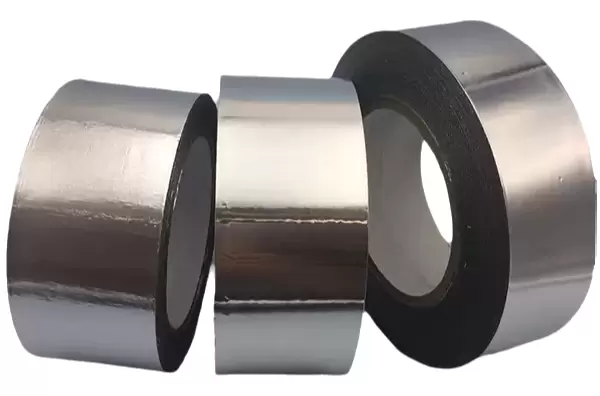
Mechanical strength is only one consideration when aluminum foil tape is used as a protective material. Aluminum foil itself provides an effective barrier against moisture, air, oils, and UV radiation. This makes foil-based tape useful where sensitive internal components need additional protection from the surrounding environment.
For battery assemblies and electrical components, moisture control can be especially important. In household appliances, the tape may also encounter changes in temperature and humidity during normal operation.
The product is designed to provide resistance to high and low temperatures, chemical corrosion, and aging. These characteristics can help support longer-term use when the tape is exposed to demanding environmental conditions.
However, the actual service environment should always be considered during material selection. Temperature range, chemical exposure, substrate type, mechanical stress, and expected service life can all affect the final performance.
Selecting the Right Construction for Production
The technical table provides several constructions rather than one universal specification. The available total thicknesses include 150 μm, 185 μm, and 160 μm. The adhesive systems also vary, with solvent-based adhesive and rubber adhesive options, while the liner materials include PET and glassine paper.
For example, the 150 μm construction uses a VC coating, solvent-based adhesive, PET liner, and a 440 × 200 mm size format. Its listed tensile strength is ≥30 N/cm. The 185 μm construction also uses VC and a solvent-based adhesive with a PET liner, but has a listed tensile strength of ≥20 N/cm. The 160 μm construction uses VC with a rubber adhesive and glassine paper liner, with a tensile strength of ≥20 N/cm.
These differences matter because production requirements are rarely identical. A buyer may need a specific liner for converting equipment, a particular adhesive behavior for the target substrate, or a certain tape width and roll length for automated application.
The stated dimensional tolerances also provide useful information for production planning. Aluminum foil thickness is controlled within ±0.005 mm, total thickness within ±0.01 mm, width within ±0.5 mm, and length within ±0.2 m.
Manufacturing Experience Matters When Specifications Need Adjustment
Tape performance depends not only on the finished specification but also on how consistently that specification can be maintained during production. This becomes more important when customers need customized widths, adhesive formulations, backing structures, or raw materials.
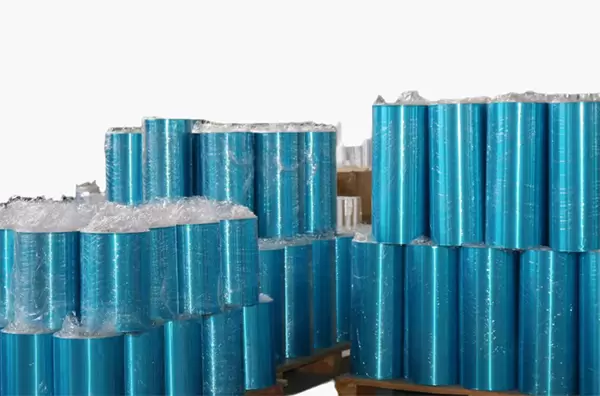
Jiangyin Biaotie Material Factory Co., Ltd. has been engaged in tape manufacturing since 1980 and has more than four decades of production experience. The company operates across approximately 15,000 square meters and has an annual production capacity of about 20 million square meters of various aluminum foil tapes.
Its approach to customization starts with understanding the customer's application. Instead of simply matching a standard specification, the company considers factors such as the application environment, local climatic conditions, substrate requirements, adhesive performance, and production process.
This can be useful for industrial buyers whose requirements do not fit neatly into a standard catalog specification. Depending on the application, adjustments may involve the substrate, adhesive formulation, liner, dimensions, or other production parameters.
Practical Considerations Before Bulk Production
Before introducing an aluminum foil tape into a production line, several tests can help reduce problems later.
First, confirm the substrate compatibility. Peel strength can vary considerably depending on the surface being bonded. Cleanliness, surface energy, roughness, and contamination should be considered during testing.
Second, check the actual installation process. If the tape will be heat-sealed, evaluate the complete heat and pressure conditions used on the production line. The bonding result should be assessed after the actual processing cycle rather than only through a basic adhesive test.
Third, evaluate tensile behavior during application. This is particularly relevant when the tape is dispensed automatically or applied around wires, components, corners, or irregular surfaces.
Fourth, consider environmental exposure. If the finished assembly will experience temperature changes, moisture, oils, chemicals, or UV exposure, samples should be tested under representative conditions.
Finally, review storage conditions. The recommended storage environment for this product is a cool, dry location at room temperature, from -5°C to 40°C with relative humidity below 80% RH. Direct sunlight and heat sources should be avoided.
A More Practical Way to Evaluate Aluminum Foil Tape
For industrial applications, the question is rarely whether a tape has high tensile strength or high peel strength by itself. The more useful question is whether the complete tape construction matches the forces and environmental conditions of the finished assembly.
Tensile strength helps evaluate the integrity of the tape during handling and application. Peel strength helps indicate adhesive bonding performance. Initial tack supports positioning during assembly, while holding power helps evaluate resistance to long-term movement. The aluminum foil contributes barrier protection, and the VC layer provides an additional heat-sealing function where compatible processing conditions are available.
This combination makes the VC Heat-sealable Aluminum Foil Tape a practical option for applications involving appliance components, heating resistor wires, battery cell connections, and battery module sealing.
For buyers developing a new application or replacing an existing tape, working through the actual substrate, temperature, mechanical load, sealing process, and environmental conditions can provide a much clearer basis for selecting the appropriate construction. With its long manufacturing history and customization capabilities, Jiangyin Biaotie Material Factory Co., Ltd. can also support application-specific discussions when standard tape specifications do not fully match the production requirement.
Ultimately, the right aluminum foil tape is not determined by a single number on a datasheet. A balanced evaluation of tensile strength, 180° peel strength, initial tack, holding power, heat-sealing behavior, barrier performance, dimensions, and environmental resistance provides a more reliable basis for industrial tape selection. For applications requiring both pressure-sensitive adhesion and thermal bonding, the VC Heat-sealable Aluminum Foil Tape offers a construction that can address multiple stages of the assembly process.


 WhatsApp