Aluminum foil is widely used in adhesive tapes because it provides a combination of flexibility, heat reflection, moisture resistance, and barrier performance. However, when aluminum foil is exposed to moisture, chemicals, condensation, or other aggressive environments for extended periods, corrosion can still become a concern. This is particularly important in refrigeration systems, insulated pipelines, automotive components, and other applications where the tape is expected to remain intact for years.
One practical way to improve this performance is to combine aluminum foil with a polymer film. Rather than relying on aluminum foil alone, the laminated structure creates an additional protective layer that helps limit direct exposure of the metal surface to the surrounding environment.
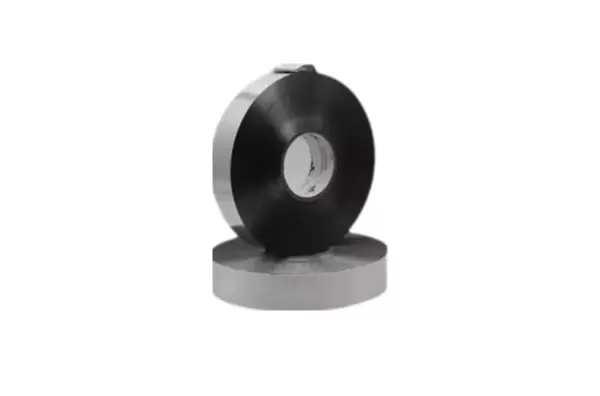
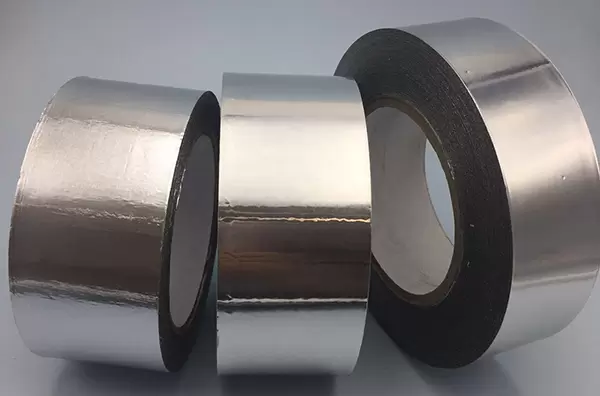
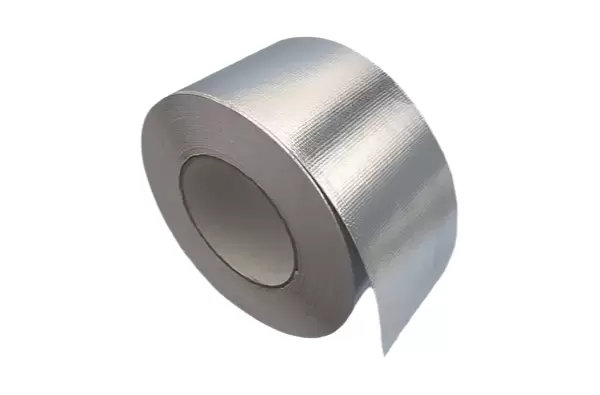
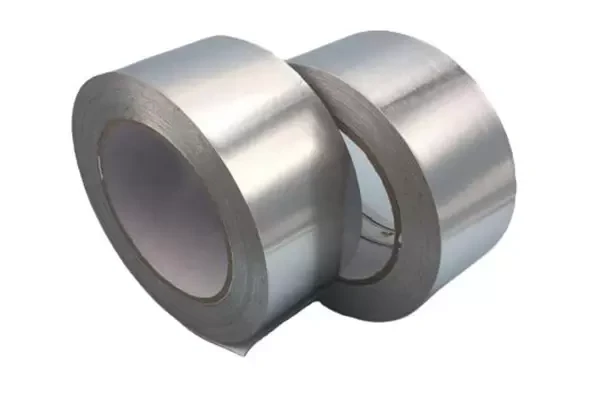
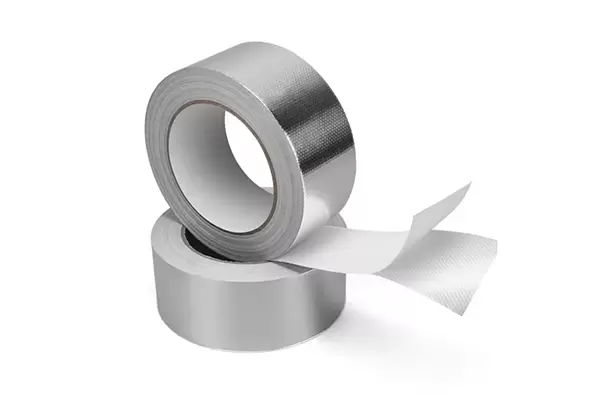
This principle is applied in Aluminum Foil Liner-Free Adhesive Tape, which combines aluminum foil and polymer film to improve corrosion resistance while also making the tape stronger and more suitable for automated application.
Why Aluminum Foil Needs Additional Protection
Aluminum naturally forms a thin oxide layer when exposed to air. This oxide layer provides a certain degree of protection, but it does not mean that aluminum is completely immune to corrosion.
In practical applications, the tape may encounter condensation, water vapor, cleaning chemicals, salts, or other substances. Small defects, prolonged moisture exposure, and contact with incompatible materials can gradually affect the aluminum surface. The risk becomes more significant when the tape is used in environments where temperature and humidity fluctuate frequently.
For example, refrigeration equipment can generate condensation around evaporators, condenser pipelines, and insulation systems. If the aluminum foil surface is repeatedly exposed to moisture, maintaining the integrity of the metal layer becomes important for long-term sealing and protection.
A polymer film can help address this problem by adding a physical barrier between the aluminum foil and the external environment.
How Polymer Film Improves Corrosion Resistance
The basic structure of this type of tape is different from conventional aluminum foil tape that uses only aluminum foil as the main substrate.
In Aluminum Foil Liner-Free Adhesive Tape, polymer film and aluminum foil are laminated together before the release treatment and adhesive coating processes. Depending on the specification, BOPP, PET, or PE film can be used as the film substrate.
The laminated film acts as an additional protective layer. When moisture or chemical contaminants reach the surface of the tape, the polymer layer reduces direct exposure of the aluminum foil to these external factors. This can help slow down surface deterioration and improve the tape's resistance to corrosive conditions.
The benefit is not simply related to the material itself. The quality of lamination also matters. A stable bond between the polymer film and aluminum foil helps maintain the integrity of the composite structure during handling, winding, installation, and long-term service.
This is especially useful where the tape needs to remain attached to a substrate while exposed to changing temperature and humidity.
Corrosion Resistance Is Not the Only Advantage
Adding polymer film also changes the mechanical behavior of aluminum foil tape.
Pure aluminum foil is relatively easy to tear or break when subjected to excessive tension. This can create problems during high-speed unwinding, machine application, or continuous wrapping operations. Once the foil breaks, production may need to stop to replace or reconnect the material.
The use of a highly extensible polymer film provides additional mechanical support. The laminated structure can offer higher extensibility and tensile strength than pure aluminum foil tape, reducing the possibility of breakage during winding and application.
The technical specifications of Aluminum Foil Liner-Free Adhesive Tape demonstrate this difference across different constructions. Depending on the adhesive and film combination, tensile strength can reach 20 N/cm, 30 N/cm, or even 40 N/cm. PET-based constructions, for example, can provide particularly high tensile strength where greater mechanical stability is required.
This makes the laminated structure useful not only for corrosion protection but also for production efficiency.
Liner-Free Construction for Automated Application
Another practical difference is the absence of conventional release paper.
Traditional aluminum foil adhesive tape may use release paper to protect the adhesive before application. While this construction is familiar and functional, the discarded liner becomes additional waste during use. In applications involving large quantities of tape, the handling and disposal of release paper can also make the process less convenient.
The liner-free construction uses a release treatment directly on the back of the film or laminated structure. The adhesive is coated on the aluminum foil side, allowing the tape to be wound into its final form without a separate release paper liner.
This design can simplify handling and reduce the amount of waste generated during application.
For automated production lines, the mechanical stability of the laminated structure is also important. A tape that can withstand continuous unwinding and machine tension with less risk of breaking can help reduce interruptions during production.
Matching Film and Adhesive to the Application
There is no single film and adhesive combination suitable for every aluminum foil tape application.
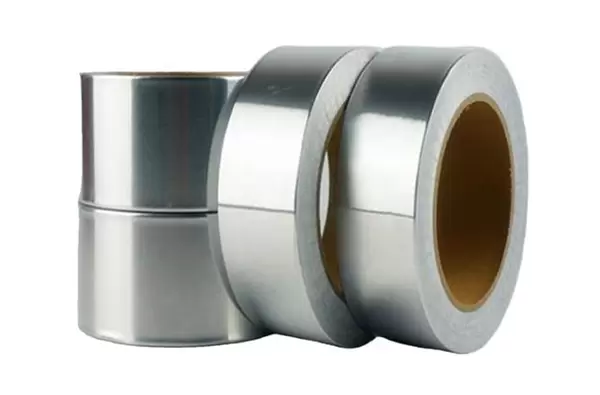
The product specifications can be adjusted according to the required performance. Available constructions include BOPP, PET, and PE film, combined with water-based, solvent-based, rubber, flame-retardant, or two-component adhesive systems.
For example, a construction using PET film can provide higher tensile strength when mechanical durability is a major requirement. BOPP-based structures can provide a balance between film performance, processing characteristics, and application requirements. Different adhesive systems can also influence peel strength, initial tack, and holding power.
The selection therefore needs to consider the actual working environment rather than focusing on a single performance parameter.
Temperature, humidity, substrate material, installation method, required service life, and whether the tape will be applied manually or by machine can all affect the appropriate specification.
Where Laminated Aluminum Foil Tape Is Used
The corrosion-resistant structure is particularly relevant to applications where aluminum foil needs to remain stable for extended periods.
In refrigeration systems, the tape can be used for thermal insulation and sealing around evaporators and condenser pipelines. These areas may experience condensation and repeated temperature changes, making moisture protection an important consideration.
The tape can also be used to wrap thin copper condenser tubes. The aluminum foil layer provides a protective and reflective surface, while the polymer film adds mechanical reinforcement and additional protection for the metal layer.
Another application is automotive interior components, including PS boards and other plastic panels. In these applications, the tape can provide surface protection while benefiting from the improved strength and handling characteristics of the laminated construction.
The same material concept can also be considered for applications where fire protection, insulation, or long-term sealing performance is required, provided that the selected adhesive and film combination meets the relevant operating conditions.
Manufacturing Experience Matters to Tape Performance
Material selection is only one part of producing reliable aluminum foil adhesive tape. Coating accuracy, lamination quality, slitting precision, adhesive formulation, and production control all influence the final product.
Jiangyin Biaotie Material Factory Co., Ltd has specialized in aluminum foil tape manufacturing since 1980. With more than four decades of production experience, the company works across substrate selection, adhesive development, coating, slitting, and customized tape production.
Its manufacturing approach focuses on adapting product parameters to the customer's actual application. This can include reviewing the working climate, substrate, installation method, and required service conditions before recommending a suitable construction.
The company also continues to upgrade raw materials and production equipment, including improvements to coating and slitting machinery for better control of production tolerances. For customers with specialized requirements, raw materials and adhesive formulations can be adjusted according to the intended application.
This application-based approach is particularly useful for laminated aluminum foil tape because the final performance depends on the combination of aluminum foil, polymer film, adhesive, and release treatment rather than on any single material.
Choosing the Right Construction for Long-Term Use
Improving corrosion resistance does not necessarily mean simply adding a thicker aluminum foil layer. A more practical approach is to build a composite structure in which each layer has a specific function.
The aluminum foil provides the required barrier and surface properties. The polymer film helps protect the metal and reinforces the tape. The adhesive determines bonding performance, while the release treatment controls handling during unwinding and application.
For long-term insulation, refrigeration, condenser wrapping, or automated production, these factors should be evaluated together.
Aluminum Foil Liner-Free Adhesive Tape provides this type of integrated construction by combining polymer film, aluminum foil, adhesive, and release treatment in one liner-free tape structure. The result is a material designed not only to resist corrosion but also to improve tensile strength, extensibility, handling, and production efficiency.
For buyers evaluating aluminum foil tape for demanding applications, looking beyond the foil itself is therefore important. The polymer layer, adhesive system, manufacturing process, and intended application all contribute to how well the tape performs over time.
 WhatsApp