Corrosion in industrial facilities does not always begin with obvious structural damage. It often starts at small, exposed areas: a panel joint where moisture collects, a pipe seam contaminated by oil, an insulation edge exposed to chemical mist, or a maintenance opening that has lost its protective covering.
Once moisture, acidic or alkaline residue, dust, and process oils reach an unprotected surface, they can gradually affect coatings, joints, fasteners, and underlying equipment materials. Preventing all contact is not always possible, but reducing direct exposure can help slow environmental deterioration and make maintenance more manageable.
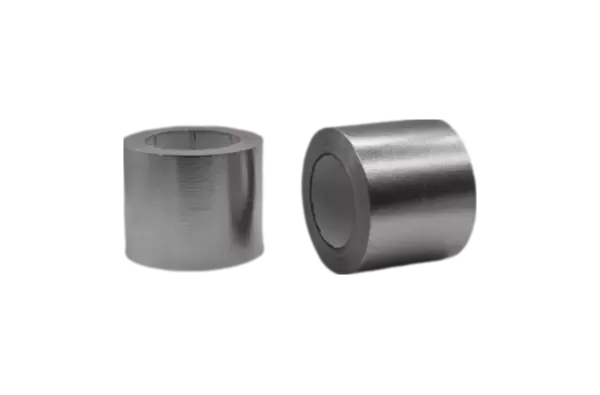
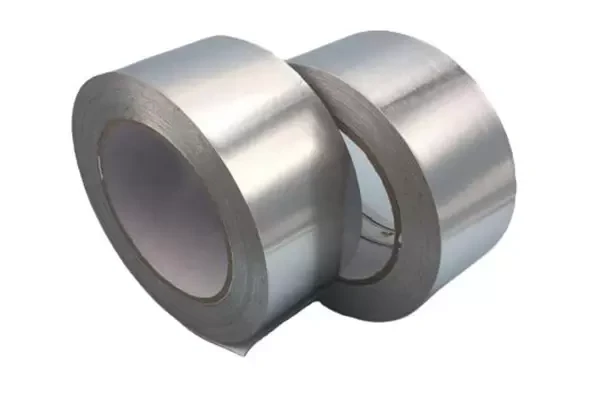
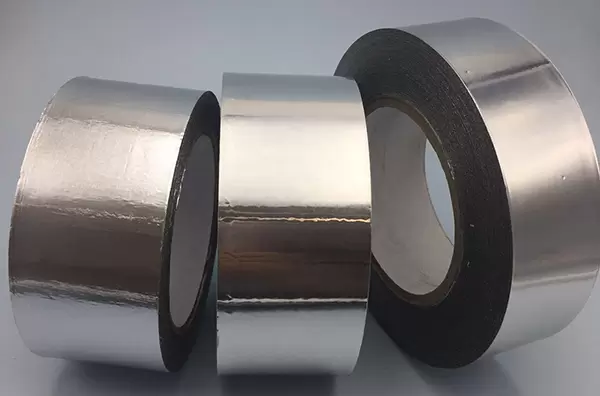
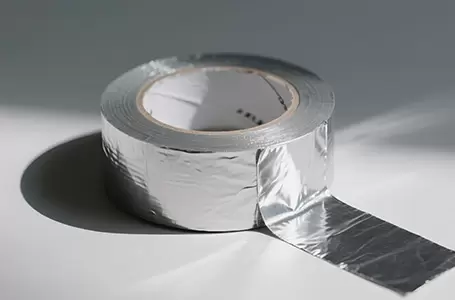
Fiberglass Cloth Aluminum Foil Tape is a reinforced sealing material that can be used to cover and protect selected surfaces in demanding industrial environments. It combines aluminum foil with fiberglass cloth, a high-performance pressure-sensitive adhesive, and a release paper or film liner. The aluminum foil forms a surface barrier, the fiberglass cloth improves mechanical strength, and the adhesive allows the tape to be applied to suitable pipes, panels, joints, and equipment surfaces.
The tape should not be treated as a replacement for a complete corrosion-control system. Instead, it is most useful as a local sealing, covering, and reinforcement material where equipment needs added protection from moisture, oil contamination, dust, and limited chemical exposure.
How Industrial Environments Affect Exposed Surfaces
Industrial equipment is often exposed to several environmental stresses at the same time. A pipe may experience heat, condensation, cleaning chemicals, and vibration. A machine panel may be exposed to oil mist, dust, and repeated handling. A duct joint may be located in a humid production area where alkaline or acidic residues are present.
These conditions can affect equipment in different ways:
- Moisture may collect around joints and edges.
- Oil can trap dirt and weaken surface cleanliness.
- Acidic or alkaline residue may attack coatings or exposed metal.
- Dust can retain moisture against the surface.
- Repeated cleaning may wear away local protective layers.
- Temperature changes can produce condensation.
- Vibration can loosen or damage light sealing materials.
The most vulnerable locations are often not the large, flat surfaces. Problems tend to develop around seams, overlaps, fasteners, bends, cut edges, and repaired sections.
A reinforced foil tape can help cover these areas and reduce direct contact between the surrounding environment and the protected surface.
The Aluminum Foil Layer as a Surface Barrier
The aluminum foil layer provides the outer protective surface of the tape. When properly applied, it can help limit the direct movement of moisture, air, dust, oil, and other contaminants toward the covered area.
This makes the tape useful for local protection around:
- Equipment panel seams
- Metal sheet overlaps
- Pipe insulation edges
- Duct joints
- Maintenance openings
- Surface repairs
- Areas exposed to splash or process residue
Unlike an open fabric or porous covering, the foil face creates a relatively continuous surface. It can also be wiped more easily than exposed fiberglass insulation or rough equipment edges.
The barrier function depends heavily on installation quality. Wrinkled tape, lifted edges, insufficient overlap, or application over a contaminated surface can leave pathways for moisture and residue. For this reason, the tape must be installed carefully if it is expected to support corrosion-resistant sealing.
Why Fiberglass Reinforcement Matters
Plain aluminum foil is easy to shape, but it can also tear when pulled across rough surfaces, sharp edges, or irregular joints. In industrial maintenance, the tape may need to be pressed around bolts, corners, pipe bends, or damaged surface areas.
Fiberglass cloth reinforcement gives the tape greater tensile strength and tear resistance. This helps the material remain intact during application and improves its stability after installation.
The reinforced structure is particularly useful when the tape is applied to:
- Uneven machine housings
- Long pipe or duct seams
- Areas exposed to vibration
- Corners and folded edges
- Surfaces requiring firm application pressure
- Locations that may be touched during inspection or servicing
A standard foil tape may split when stretched or pressed around a difficult shape. Fiberglass Cloth Aluminum Foil Tape is more suitable where the protective layer needs additional mechanical support.
The reinforcement does not make the tape immune to damage, but it lowers the risk of accidental tearing and helps maintain a more consistent barrier surface.
Protecting Pipes and Insulated Components
Industrial pipes are frequently exposed to condensation, oil mist, cleaning water, chemical vapour, and process dust. Where insulation is installed, the outer joints and termination points can become weak areas.
Fiberglass Cloth Aluminum Foil Tape can be used to seal selected insulation seams and protect exposed edges. The aluminum surface helps create a barrier over the joint, while the fiberglass backing gives the tape enough strength to follow the shape of the pipe without tearing easily.
Typical uses may include:
- Sealing overlaps in external pipe insulation
- Covering small exposed insulation edges
- Reinforcing damaged outer wrapping
- Protecting local pipe surface areas
- Sealing around fittings or transition points
The tape is suitable for long-term use from -30°C to 200°C, allowing it to be considered for many industrial pipe environments where both temperature resistance and surface protection are needed.
However, the actual suitability depends on the pipe temperature, chemical exposure, surface material, and adhesive selection. A test under the intended service conditions is advisable for demanding applications.
Sealing Equipment Panels and Sheet-Metal Joints
Industrial cabinets, machine covers, ventilation housings, and process equipment often use sheet-metal panels joined by screws, folds, or overlapping edges. These joints can collect dust, moisture, and oil, especially when they are positioned horizontally or near process equipment.
Applying reinforced aluminum foil tape over selected seams can help create a cleaner and more continuous protective surface. It may also prevent residue from entering narrow gaps that are difficult to clean.
The pressure-sensitive adhesive supports direct application to suitable panel surfaces. Because the tape is lined with release paper or film, it can be cut and positioned before final pressure is applied.
For effective panel-joint protection, the tape should extend far enough onto both sides of the seam. Narrow coverage may leave the edges vulnerable to lifting. The installer should also consider how the equipment will be opened or serviced, since sealing removable panels may affect later maintenance access.
Resistance to Acidic and Alkaline Environments
The product is designed to provide resistance to acidic and alkaline conditions, making it suitable for surface sealing in certain corrosive industrial environments.
This does not mean that it can withstand unlimited exposure to every chemical concentration. Chemical performance varies according to:
- Acid or alkali type
- Concentration
- Exposure duration
- Operating temperature
- Surface preparation
- Adhesive formulation
- Contact method, such as splash, mist, or immersion
The tape is more appropriately used to reduce incidental or limited contact with corrosive contaminants rather than as the sole protection for equipment under continuous chemical immersion.
For example, it may be used around equipment near cleaning processes, chemical-handling areas, ventilation systems, or production lines where occasional acidic or alkaline residue is present. In such locations, the foil surface can help reduce direct contamination of the covered joint or panel area.
For severe chemical service, the tape should be evaluated together with coatings, corrosion-resistant substrates, gaskets, and other protective materials.
Managing Moisture, Oil, and Dust
Not all corrosion risks come from aggressive chemicals. In many factories, the more common problem is the combination of moisture, oil, and dust.
Oil mist can settle on equipment surfaces and hold dust in place. Moisture may then remain trapped against seams or exposed metal. Over time, this contamination can make inspection and cleaning more difficult and may accelerate local surface deterioration.
Fiberglass Cloth Aluminum Foil Tape can help by creating a smoother protective covering over selected problem areas. The foil surface can be cleaned more easily than rough joints, exposed insulation, or open fabric layers.
Suitable areas may include:
- Machine panel edges near lubricated equipment
- Duct surfaces in humid workshops
- Pipe insulation joints near washdown areas
- Equipment covers exposed to dust and condensation
- Local repairs in difficult-to-clean areas
The purpose is not to eliminate maintenance. Rather, the tape helps reduce the direct exposure of vulnerable surfaces and makes routine cleaning and inspection more practical.
Surface Preparation Determines Sealing Quality
A corrosion-resistant tape cannot perform properly if it is applied over oil, dust, loose rust, moisture, or peeling coatings. Surface preparation is one of the most important steps in the application process.
Before applying the tape:
- Remove loose dirt, dust, and surface particles.
- Clean oil or grease with an appropriate cleaning method.
- Allow the surface to dry completely.
- Remove loose rust or unstable coating where possible.
- Confirm that the substrate is compatible with the adhesive.
- Apply the tape with firm, even pressure.
- Use sufficient overlap at joints and tape connections.
- Inspect edges for lifting, wrinkles, or incomplete contact.
The pressure-sensitive adhesive must make close contact with the substrate. Applying tape over contamination may create a temporary appearance of sealing, but the edges can lift later and allow moisture to enter beneath the foil layer.
For critical applications, a sample test should be completed before full installation.
Choosing the Adhesive System
Fiberglass Cloth Aluminum Foil Tape can be produced with water-based, solvent-based, or flame-retardant adhesive systems. For corrosion-resistant sealing, the adhesive should be selected according to the substrate, temperature, humidity, and chemical environment.
A solvent-based adhesive may be preferred for some industrial applications requiring longer shelf life or stable bonding performance. Water-based and flame-retardant adhesive versions may be selected where their specific properties better match the project requirements.
Shelf-life guidance includes:
- Water-based and flame-retardant adhesives: 6 months
- Solvent-based adhesive: 12 months
These periods apply when the product is stored under recommended conditions. Material that has exceeded its shelf life should be checked before use, especially for reduced tack, difficult liner removal, or edge curling.
Dimensional Consistency for Industrial Processing
Consistent tape dimensions are important when material is converted, die-cut, or applied in repeated production processes.
The stated tolerance range includes:
- Aluminum foil thickness: ±0.005 mm
- Total thickness: ±0.01 mm
- Width: ±0.5 mm
- Length: ±0.2 m
These tolerances help industrial users plan cutting, roll application, overlap widths, and material consumption more accurately.
For manual maintenance work, minor dimensional variation may not create a major problem. In automated or repeated production, however, stable width and thickness can improve application consistency.
Inspection and Maintenance After Application
Protective tape should be inspected as part of routine equipment maintenance. Industrial environments can change over time, and tape may be affected by vibration, impact, cleaning, surface movement, or unexpected chemical exposure.
During inspection, check for:
- Lifted or curled edges
- Cuts and punctures
- Loose overlaps
- Chemical staining
- Trapped moisture
- Adhesive softening
- Damage caused by maintenance work
Damaged sections should be removed or repaired before contaminants reach the covered surface. Where corrosion is already present, the condition should be assessed rather than simply covered with new tape.
The tape performs best as a preventive or early-stage protective material, not as a way to hide active corrosion.
Storage Before Industrial Use
The tape should be stored in a cool, dry environment from -5°C to 40°C, with relative humidity below 80% RH. Direct sunlight and nearby heat sources should be avoided.
Rolls should remain in their original packaging until needed. Storage areas should be kept free from water, dust, and chemical vapours that could affect the adhesive or foil surface.
Correct storage supports stable liner release and bonding performance, especially when tape is purchased in larger quantities for scheduled maintenance or manufacturing use.
A Practical Barrier for Local Surface Protection
Corrosion control usually involves a combination of suitable base materials, coatings, drainage, ventilation, cleaning, inspection, and sealing. Fiberglass Cloth Aluminum Foil Tape should be used as one part of that broader approach.
Its aluminum foil layer helps create a surface barrier against moisture, air, oil, dust, and limited chemical exposure. The fiberglass cloth gives the tape added strength, while the pressure-sensitive adhesive supports application to suitable equipment surfaces, pipes, panels, and joints.
For industrial users, its main value lies in protecting local weak points: seams where residue can collect, insulation edges exposed to humidity, panel joints near oil mist, and equipment surfaces requiring a reinforced covering.
When properly selected and installed, Fiberglass Cloth Aluminum Foil Tape can help delay the effects of environmental exposure, simplify cleaning, and improve the durability of selected sealed areas without overstating its role as a complete corrosion solution.
 WhatsApp