Hot air duct systems are only as effective as their weakest joints. Even when ductwork is properly insulated, small gaps between sections can allow heated air to escape, reduce thermal efficiency, and create uneven temperatures throughout a building or industrial facility. In environments where ducts operate at elevated temperatures, ordinary sealing tape may also lose adhesion, deteriorate, or tear under mechanical stress.
Choosing the right sealing material is therefore an important part of duct installation and maintenance. Fiberglass Cloth Aluminum Foil Tape offers a practical option for applications that require heat resistance, reliable adhesion, and greater mechanical strength than conventional foil tape. Its reinforced construction makes it suitable for sealing hot air duct joints, securing insulation materials, and protecting selected areas exposed to demanding operating conditions.
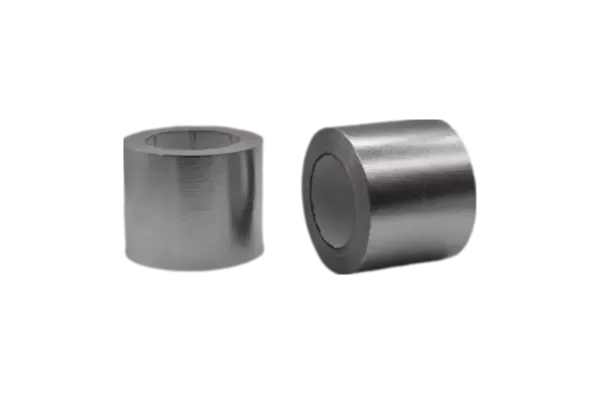
Why Hot Air Duct Joints Need Reinforced Sealing Tape
Hot air ducts are commonly found in commercial buildings, industrial workshops, heating systems, and equipment that requires controlled air circulation. During operation, these systems experience temperature changes, airflow pressure, and vibration. Insulation materials around the ducts may also move slightly as equipment starts and stops.
These conditions can place considerable stress on joints and seams. If the sealing material cannot withstand repeated thermal exposure or mechanical movement, it may gradually peel away from the surface. Gaps can then develop, allowing heated air to escape and reducing the effectiveness of the insulation system.
A suitable tape should address several practical requirements. It needs to maintain adhesion within the intended operating temperature range, resist tearing during installation, and provide a stable barrier over seams and insulation connections. For certain industrial applications, flame-retardant adhesive options may also be necessary.
Fiberglass reinforcement helps address the mechanical demands of these installations. Rather than relying solely on a thin aluminum foil layer, the tape incorporates a fiberglass cloth substrate that improves tensile strength and resistance to tearing. This makes it easier to handle when sealing duct seams and working around insulation joints.
How Fiberglass Cloth Aluminum Foil Tape Is Constructed
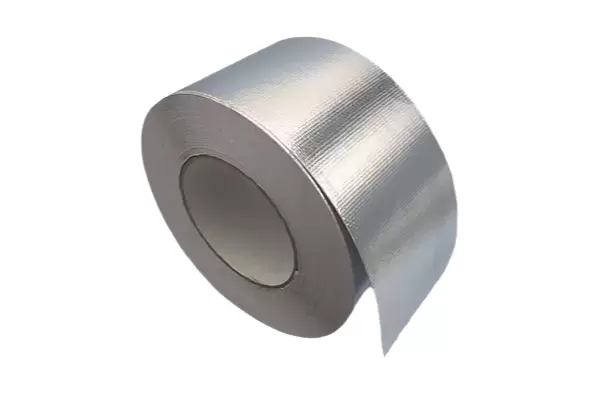
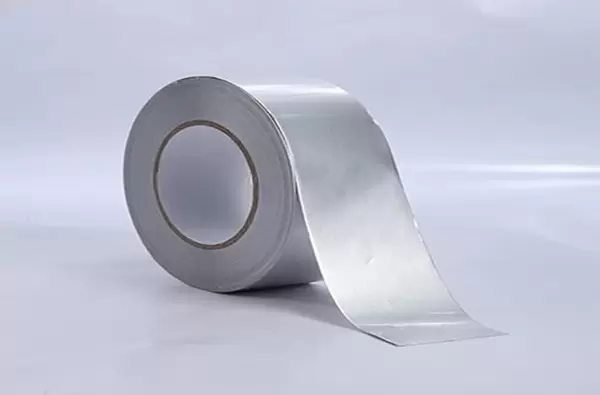
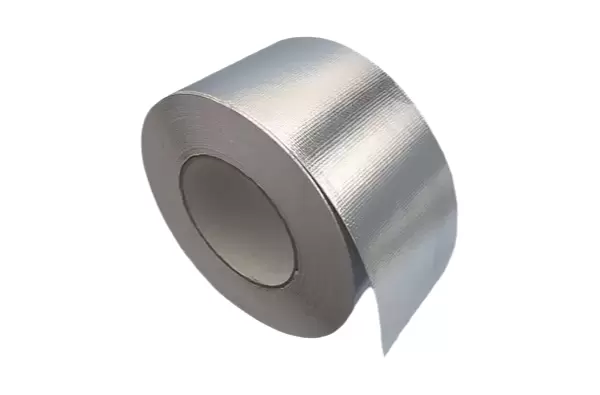
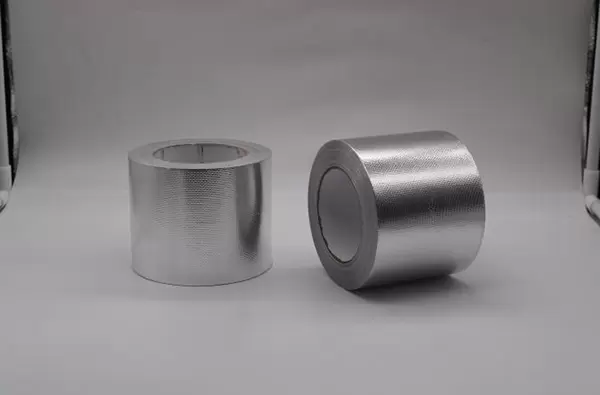
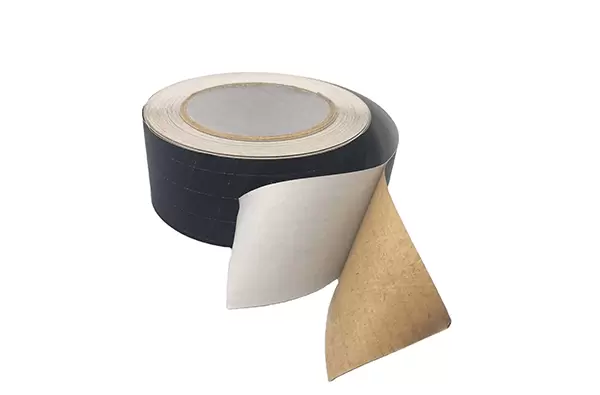
The performance of Fiberglass Cloth Aluminum Foil Tape comes from the combination of several functional layers. The product uses a fiberglass cloth substrate laminated with aluminum foil on one or both sides. A pressure-sensitive adhesive is applied to provide bonding, while release paper or release film protects the adhesive before use.
Each component contributes a different benefit.
The aluminum foil layer reflects radiant heat and helps protect the underlying insulation surface. It also provides a continuous covering over seams when the tape is correctly applied. The fiberglass cloth reinforces the composite structure, improving its resistance to tensile forces and tearing during installation and service.
The pressure-sensitive adhesive determines how effectively the tape bonds to the selected surface. Depending on the application, adhesive options may include solvent-based, water-based, and flame-retardant formulations. These options should be evaluated according to the operating temperature, substrate material, environmental conditions, and relevant fire-safety requirements.
The release liner protects the adhesive during storage and transportation. It also allows installers to position the tape before pressing it onto the prepared surface.
This layered construction makes reinforced foil tape useful where a balance of thermal performance, mechanical durability, and practical installation is required.
Key Performance Features for Hot Air Duct Applications
Resistance to Elevated Temperatures
The specified operating temperature range for this tape is -30°C to 200°C. This range makes it a candidate for various hot air duct and thermal insulation applications, provided the actual service conditions fall within the product's validated limits.
When selecting a tape for ductwork, buyers should distinguish between the temperature resistance of the adhesive and the performance of the complete composite construction. Continuous exposure, short-term temperature peaks, surface conditions, and thermal cycling can all influence service life.
For this reason, the maximum stated temperature should not be treated as a universal guarantee for every installation. Project teams should confirm suitability for their specific equipment and operating environment.
Improved Tensile Strength and Tear Resistance
Duct sealing often involves working around corners, overlapping insulation sections, and joining materials with different surface characteristics. A tape that tears easily can slow installation and create inconsistent coverage.
Fiberglass reinforcement provides additional structural support, helping the tape resist tearing when handled and applied. This is especially useful when securing insulation coverings or sealing seams that require careful positioning.
Mechanical reinforcement does not eliminate the need for correct installation, but it can make the material easier to handle in demanding applications.
Flame-Retardant Adhesive Options
Some hot air duct installations are located near electrical equipment, heating units, or other areas where fire performance is an important consideration. Flame-retardant adhesive formulations may be appropriate for these projects.
However, flame retardancy of the tape itself does not automatically establish compliance with a complete fire-rated duct or building assembly. Buyers should verify the relevant test reports, certification requirements, and installation specifications before using the product in regulated fire-protection applications.
Adhesion and Holding Performance
Reliable sealing depends on more than the backing material. Adhesive performance affects how well the tape remains attached to metal surfaces, insulation facings, and other compatible substrates.
Available technical specifications include initial tack of at least 10# and holding power of at least 24 hours under the applicable test methods. These figures provide useful reference points for product comparison, although they should not be interpreted as direct predictions of service life under hot-air operating conditions.
Surface preparation, application pressure, dust, moisture, and the condition of the substrate can all influence the final bond.
Practical Steps for Sealing Hot Air Duct Joints
Even a well-designed tape can underperform if the installation process is rushed. Following a consistent procedure helps improve sealing quality and reduce avoidable failures.
1. Inspect the Ductwork
Before applying tape, examine the duct joints and surrounding insulation. Identify loose connections, damaged insulation facings, sharp edges, and areas where previous sealing materials have detached.
Tape should not be used as a substitute for repairing a structurally loose duct connection. Any underlying mechanical defects should be corrected first.
2. Prepare the Surface
Remove dust, grease, loose particles, and moisture from the bonding area. The surface must be compatible with the selected adhesive and sufficiently clean to support a reliable bond.
If a cleaning agent is used, allow the surface to dry completely before applying the tape. Follow the equipment manufacturer's requirements when cleaning coated metal or insulation facings.
3. Measure and Position the Tape
Cut the tape to the required length before removing the release liner. Position it so that it covers the joint evenly, with sufficient overlap onto both sides of the seam.
Avoid stretching the tape excessively during application. Excessive tension can cause the material to lift or pull away after installation.
4. Apply Firm, Even Pressure
Remove the liner gradually and press the tape onto the surface, working along the joint to minimize wrinkles and trapped air. Pay particular attention to corners, edges, and overlapping sections, where incomplete contact can create potential leakage paths.
Where the installation design requires additional mechanical fastening or a separate sealing compound, follow the specified system rather than relying on tape alone.
5. Inspect the Finished Joint
After application, check that the tape is fully bonded and that there are no visible gaps, lifted edges, or damaged sections. Confirm that the ductwork and insulation system meet the project's sealing requirements before returning the equipment to normal operation.
Where required, perform leakage checks and follow the commissioning procedures specified for the system.
Selecting the Right Specification for Different Projects
Not every duct installation requires the same tape construction. Aluminum foil thickness, fiberglass fabric weight, adhesive type, liner material, and roll dimensions should be selected according to the application.
Available specification combinations include aluminum foil thicknesses of 6 mm? No—buyers should verify the stated unit carefully: the listed values are 6, 8, and 16 μm. Fiberglass fabric areal weights include 75, 100, 120, and 210 g/m². Adhesive options include solvent-based, water-based, and flame-retardant types, with different release liner materials and roll formats.
The listed configurations also specify tensile strength values of at least 4 or 6 N/cm, depending on the model, together with the stated tack and holding-power requirements. Exact values should be checked against the relevant product specification before ordering.
For procurement teams, it is useful to provide the supplier with the following information:
l Normal operating temperature and any short-term temperature peaks.
l Duct surface material and insulation facing type.
l Whether flame-retardant properties or documented fire-performance testing are required.
l Required tape width, roll length, foil thickness, and fiberglass fabric weight.
l Installation environment, including humidity, vibration, and exposure to corrosive substances.
Clear application information helps narrow the available specifications and reduces the risk of selecting a tape based only on its general product description.
Beyond Hot Air Ducts: Other Industrial Applications
Although hot air duct sealing is an important use, reinforced foil tape can also support other thermal insulation and protective applications.
In industrial heating systems, it can be used to secure insulation coverings around boilers and steam pipelines, subject to the relevant temperature and material limitations. In infrastructure projects, it may be considered for selected sealing tasks around ventilation joints and cable penetration areas when the complete assembly meets the required fire-safety specifications.
The composite construction can also be relevant to certain electromagnetic interference shielding applications involving server cabinets, communication equipment, and medical devices. Performance in these applications depends on the tape's conductive continuity, grounding arrangement, seam design, and system-specific requirements.
In environments exposed to corrosive substances, the aluminum foil layer may provide a protective surface, but resistance to particular acids, alkalis, or chemicals must be verified for the actual concentration, exposure duration, and operating conditions.
These applications illustrate why buyers should evaluate the complete product specification rather than assuming that every reinforced foil tape is suitable for every industrial environment.
Working with an Experienced Aluminum Foil Tape Manufacturer
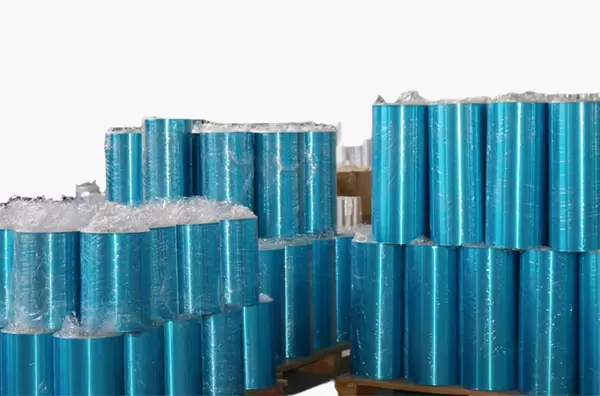
Product consistency matters when reinforced foil tape is used in recurring production, building maintenance, or large-scale insulation projects. Differences in adhesive coating, material thickness, slitting accuracy, and liner handling can affect installation efficiency and finished-joint quality.
Jiangyin Biaotie Material Factory Co., Ltd. was established in 1980 and has developed specialized experience in aluminum foil tape manufacturing. The company operates across a 15,000 m² site and reports annual production of approximately 20 million m² of various aluminum foil tapes.
Its manufacturing approach includes upgrading raw materials, developing high-performance adhesives, and improving coating and slitting equipment. These capabilities are relevant to customers who need consistent specifications, dependable dimensional tolerances, and product configurations suited to specific applications.
The company also emphasizes application-based communication. By discussing the intended use, environmental conditions, and performance requirements before production, its team can help buyers assess suitable substrate and adhesive combinations. Customization may be considered when standard specifications do not fully match a project's requirements.
For overseas buyers, clear technical communication is particularly valuable. Confirming the required temperature range, adhesive type, roll dimensions, and relevant compliance documentation before placing an order helps reduce misunderstandings during production and installation.
Storage and Shelf-Life Considerations
Correct storage helps preserve the adhesive's performance before the tape reaches the installation site. The recommended storage conditions are a cool, dry environment at temperatures between -5°C and 40°C, with relative humidity below 80%. Direct sunlight and nearby heat sources should be avoided.
The stated shelf life is six months for water-based and flame-retardant adhesive versions and twelve months for solvent-based versions. Buyers should confirm the applicable production date, storage requirements, and shelf-life conditions for the specific product supplied.
Before installation, inspect the roll and release liner for damage or signs of improper storage. Material that has exceeded its recommended shelf life should be evaluated in accordance with the supplier's guidance rather than assumed to retain its original performance.
Conclusion
Sealing hot air duct joints requires a material that can accommodate elevated temperatures, provide dependable adhesion, and withstand the mechanical demands of installation. Reinforced aluminum foil tape combines the heat-reflective properties of aluminum foil with the tensile strength and tear resistance of fiberglass cloth, making it a useful option for suitable duct sealing and insulation applications.
Choosing the correct adhesive, backing specification, and roll dimensions is just as important as selecting the general product type. By matching the tape to actual operating conditions and following proper surface preparation and application procedures, installers can improve sealing consistency and support the long-term performance of duct insulation systems.
For projects that require a tailored specification, Fiberglass Cloth Aluminum Foil Tape from Jiangyin Biaotie Material Factory Co., Ltd. is worth evaluating against the project's temperature, adhesion, mechanical, and compliance requirements before final selection.

 WhatsApp