In refrigeration equipment manufacturing, adhesive performance affects more than whether a tape stays in place. It influences component assembly, sealing reliability, and the ability of insulation materials to maintain consistent contact throughout the service life of a refrigerator or freezer. Aluminum foil tape used in these applications must perform under specific processing conditions, including component positioning, surface bonding, and polyurethane (PU) foam injection.
Rubber-based pressure-sensitive adhesives are commonly selected for aluminum foil tapes because they provide initial tack and adhesion to suitable surfaces without requiring a separate curing process. However, refrigeration applications involving injected PU foam introduce an additional requirement: the tape must also integrate reliably with the foam insulation structure. This is where PU Foam-Bondable Liner-Free Aluminum Foil Tape offers a more specialized construction, combining a rubber-based adhesive surface with a dedicated PU foam-bondable coating on the opposite side.
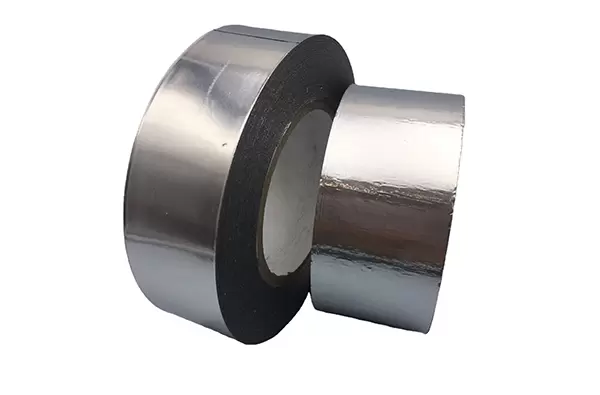
1. Why Rubber-Based Adhesives Matter in Refrigeration Aluminum Foil Tape
Refrigerators and freezers contain multiple components that require insulation, positioning, and sealing during assembly. Aluminum foil tape may be applied to panels, condenser-related components, and other areas where a stable adhesive connection is needed.
The rubber-based pressure-sensitive adhesive on the front side of the foil provides the initial bonding force when the tape is pressed onto a suitable substrate. This property is particularly useful in manufacturing environments where operators need to position tape accurately without waiting for a liquid adhesive to dry.
Three performance characteristics are especially relevant:
Initial tack determines how readily the tape attaches when it first contacts a surface. Sufficient initial tack helps the tape remain in position during subsequent assembly operations.
Peel strength measures the force required to remove the tape from a bonded surface under specified test conditions. It provides a useful reference for evaluating the adhesive's resistance to separation.
Holding power evaluates how well the adhesive maintains its position under a sustained load over time. This is important when components must remain secured during handling and further manufacturing processes.
These properties should be considered together rather than evaluated independently. A tape with good initial tack may be convenient during application, but its long-term suitability also depends on peel strength, holding power, substrate compatibility, and the conditions under which it is used.
2. Understanding the Two Functional Coatings
One important feature of this specialized aluminum foil tape is its two-sided coating design. Unlike conventional aluminum foil tape, where the adhesive primarily serves a single bonding function, this product is designed to support two different interfaces.
The front side is coated with a rubber-based pressure-sensitive adhesive. It provides the conventional adhesive function, allowing the aluminum foil tape to attach to suitable surfaces during component preparation and assembly.
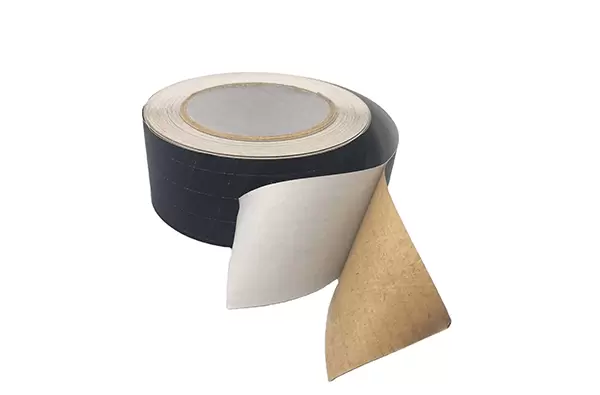
The backside features a specialized release coating that maintains release characteristics while enabling thermal bonding with polyurethane foam. During the PU foam injection process, this coating supports a secure connection between the tape and the injected foam.
The distinction between these two surfaces is important. The rubber-based adhesive handles the initial attachment to the target substrate, while the opposite coating is designed for thermal integration with PU foam. They perform different functions within the same insulation assembly.
This arrangement makes PU Foam-Bondable Aluminum Foil Tape particularly relevant to refrigerator and freezer manufacturing, where the tape may need to be positioned before foam injection and subsequently become part of the insulated structure.
3. Key Adhesive Performance Parameters and Their Practical Meaning
Technical specifications help manufacturers determine whether an aluminum foil tape is suitable for their production requirements. For refrigeration applications, three adhesive-related indicators deserve particular attention.
180° Peel Strength
Peel strength measures the force required to remove the tape from a test surface at a 180-degree angle. The available product specifications indicate a peel strength of at least 7.5 N/cm.
This value provides a reference for comparing adhesive performance under standardized test conditions. In actual production, the result may also be affected by the surface material, cleanliness, application pressure, and testing environment. Therefore, manufacturers should evaluate the tape on representative substrates before confirming its suitability.
Initial Tack
Initial tack describes the adhesive's ability to establish contact quickly after application. The product has an initial tack specification of at least 15#.
For refrigerator assembly, this property helps operators position the tape and maintain contact during subsequent handling. Consistent application pressure and proper surface preparation remain necessary to achieve repeatable results.
Holding Power
Holding power evaluates the adhesive's resistance to movement under sustained loading. The specified holding power is at least 24 hours.
This indicator is useful when assessing whether the tape can maintain its position during storage, handling, and manufacturing operations. It should be interpreted according to the applicable test method and conditions rather than treated as a direct prediction of service life.
Together, these three parameters provide a practical starting point for evaluating the rubber-based adhesive system.
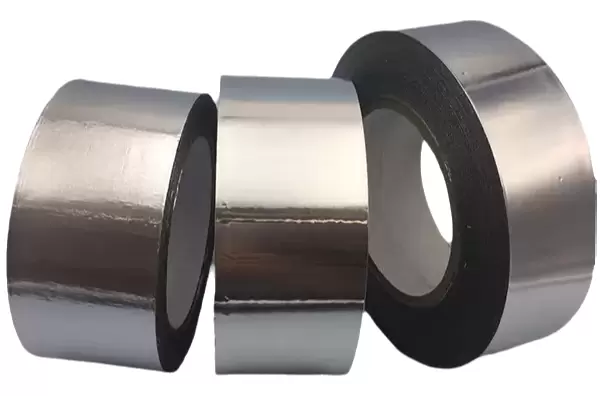
4. How the Tape Supports PU Foam Insulation in Refrigerators and Freezers
The insulation structure of a refrigerator typically combines metal panels, internal components, and injected polyurethane foam. During manufacturing, the foam fills the designated cavity and forms an insulating layer between the inner and outer compartments.
Tape used in this process must be compatible with the manufacturing sequence. It may first be applied to a component or panel and then exposed to the PU foam injection and bonding process.
The specialized backside coating of this aluminum foil tape is designed to establish thermal adhesion with the injected foam. This helps create a more integrated connection between the foil-based material and the insulation structure.
The aluminum foil also contributes to thermal management through its reflective surface. Under suitable conditions, aluminum can reflect up to 97% of radiant heat. Meanwhile, PU foam provides insulation against heat transfer through conduction.
These functions are complementary, but they should not be confused. The reflectivity of the aluminum surface is not equivalent to the overall insulation efficiency of the complete refrigerator structure. Actual thermal performance depends on the foam density, thickness, continuity, assembly design, and other construction details.
For manufacturers, the practical objective is to achieve reliable bonding and minimize unwanted gaps that could compromise the insulation assembly.
5. BOPP and PE Film Options for Different Manufacturing Requirements
The selection of backing materials is another consideration when choosing aluminum foil tape for PU foam insulation. Different film structures can influence flexibility, handling characteristics, and application performance.
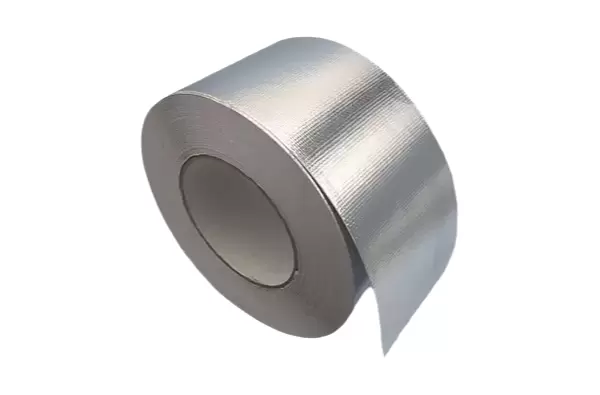
BOPP-laminated aluminum foil tape provides a film-supported structure that can be useful in applications requiring dimensional stability during handling and processing. The product range includes an 80 μm version with a BOPP film structure and a 50 mm × 400 m format.
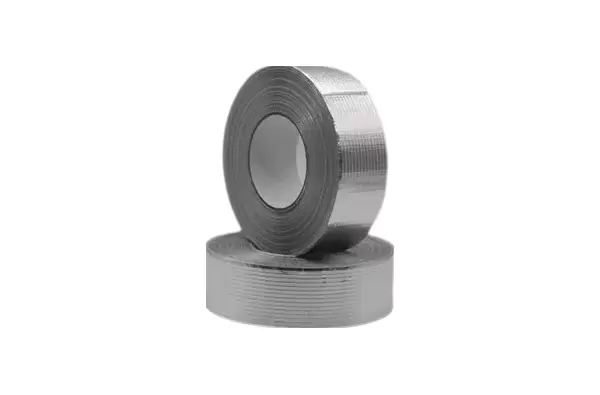
PE-laminated aluminum foil tape offers another construction option. One available specification has a total thickness of 120 μm and a size of 34 mm × 50 m.
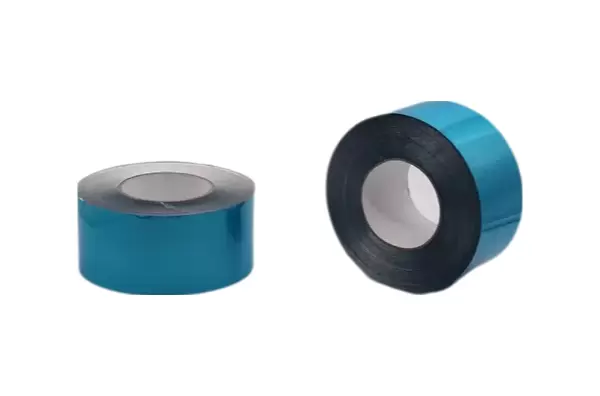
The PU foam-bondable coating can also improve resistance to acid and alkali corrosion in applicable BOPP- or PE-laminated constructions. It is designed to help prevent tape breakage during application and improve overall flexibility.
The appropriate structure depends on the equipment, application geometry, substrate, and manufacturing process. Rather than selecting a tape based on film type alone, manufacturers should consider the complete combination of foil thickness, film construction, adhesive properties, and foam bonding requirements.
6. Product Specifications for Industrial Evaluation
The following specifications provide a reference for evaluating the available product configurations.
Parameter | Available specification |
Total thickness | 60, 75, 80 and 120 μm |
Adhesive type | Rubber |
Film options | BOPP, PE or no film |
180° peel strength | ≥7.5 N/cm |
Initial tack | ≥15# |
Holding power | ≥24 h |
Tensile strength | ≥10–30 N/cm, depending on specification |
Available sizes include:
l 50 mm × 400 m, 80 μm, BOPP
l 100 mm × 50 m, 60 μm, without film
l 1000 mm × 2000 m, 80 μm, without film
l 34 mm × 50 m, 120 μm, PE
l 50 mm × 100 m, 75 μm, without film
The specifications are not identical across all configurations. Tensile strength, for example, ranges from at least 10 N/cm to at least 30 N/cm depending on the selected construction. Buyers should confirm the required specification for their intended application.
Dimensional tolerances are also important for production consistency. The specified tolerances are ±0.005 mm for aluminum foil thickness, ±0.01 mm for total thickness, ±0.5 mm for width, and ±0.2 m for length.
7. Application Conditions and Storage Considerations
Even when a tape meets its technical specifications, application conditions can influence the final bonding result. Surfaces should be clean and free from dust, oil, moisture, and other contaminants that may interfere with adhesive contact.
During application, operators should ensure that the tape is properly aligned and pressed against the intended surface. For PU foam bonding, the foam injection process and relevant thermal conditions should be evaluated to confirm compatibility with the specialized backside coating.
Storage is equally important. The recommended storage environment is a cool, dry location with a temperature between -5°C and 40°C and relative humidity below 80% RH. Direct sunlight and exposure to heat sources should be avoided.
Maintaining these conditions helps preserve the adhesive's intended properties before the tape enters production.
8. Choosing a Manufacturing Partner for Customized Aluminum Foil Tape
Standard specifications do not always address every refrigeration manufacturer's requirements. Different equipment designs, foam injection processes, substrate materials, and regional operating conditions may call for adjustments to the tape construction.
Jiangyin Biaotie Material Factory Co., Ltd. has specialized in aluminum foil tape manufacturing since 1980, bringing more than 45 years of industry experience. The company operates on a 15,000 m² manufacturing site, with an annual production capacity of 20 million m² of various aluminum foil tapes.
Its manufacturing capabilities include the development of adhesive formulations, raw material selection, coating, and slitting processes. Production equipment has been upgraded with program controls to improve process precision and maintain more consistent product tolerances.
For customers requiring specialized tape constructions, the company provides customization based on the intended application. This may involve evaluating alternative backing materials, adjusting adhesive formulations, or sourcing specific raw materials to meet particular production requirements.
With more than 25 years of international trade experience and customers across Europe, Southeast Asia, Central Asia, and North America, the company also considers differences in application environments and regional operating conditions when recommending product specifications.
For refrigeration manufacturers, selecting a suitable tape involves more than checking a single peel strength value. The complete structure must work with the target substrate, PU foam injection process, and final insulation assembly.
A properly selected PU Foam-Bondable Liner-Free Aluminum Foil Tape combines the positioning advantages of a rubber-based pressure-sensitive adhesive with a specialized backside coating designed for thermal bonding to PU foam. Evaluating both functions, together with film construction and mechanical specifications, provides a more reliable basis for choosing an aluminum foil tape for refrigerator and freezer insulation applications.

 WhatsApp